This page gathers together various aspects of Roanna Mitchell’s research exploring Michael Chekhov’s technique in the context of dance, movement, and dance-theatre crossovers. This work is inspired by, and building on, the work of a number of scholars and practitioners in the field, who are referred to in associated publications and/or mentioned on this page.
New in 2021: In Conversation with Suzanne Bennett on Chekhov for Dance
New in 2021: In Conversation with Anna Katharina Andrees on Chekhov, Movement, Dance and Circus
New in 2021: Grace Wranosky on Chekhov Technique in Inclusive Dance Practice
Research background: Chekhov and me
Early beginnings
Applications of Chekhov’s technique for more ‘traditional’ acting approaches in work with playtext and character are well-known. Over the past two decades the field of exploration and investigation among scholars and practitioners has broadened significantly, examining the use of Chekhov technique in other aspects of performance, arts and community practice.
Firstly, I participated as performer and assistant director in a wonderful three years of bi-weekly studio exploration for Cass Fleming’s research strand on ‘Chekhov Technique for Devised Theatre and Catalyst Direction’ (2013-16). Using Saint-Exupéry’s Little Princeand a rich range of unpublished archival materials from Chekhov’s time at Dartington Hall, we explored uses of the technique in devising, for ensemble-forming and play, and approaches to directing (see Fleming 2020, pp29-63).
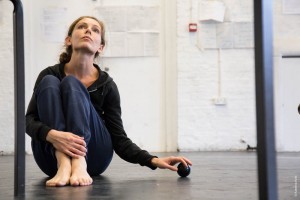
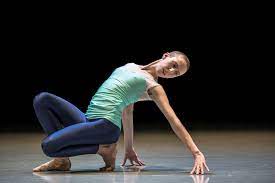
Image: Katerina Kotti
Secondly, I took the lead on the research strand ‘Chekhov technique in Actor-Movement and Dance’, which I began in 2016, and which remains ongoing. The research journey so far has led to the publication of a chapter in Fleming and Cornford’s book (2020), an article on Chekhov’s collaborators and their links with dance (2020), and a series of practice-research events, workshops, presentations and studio experiments with a range of artists and scholars, all of which are on this page.
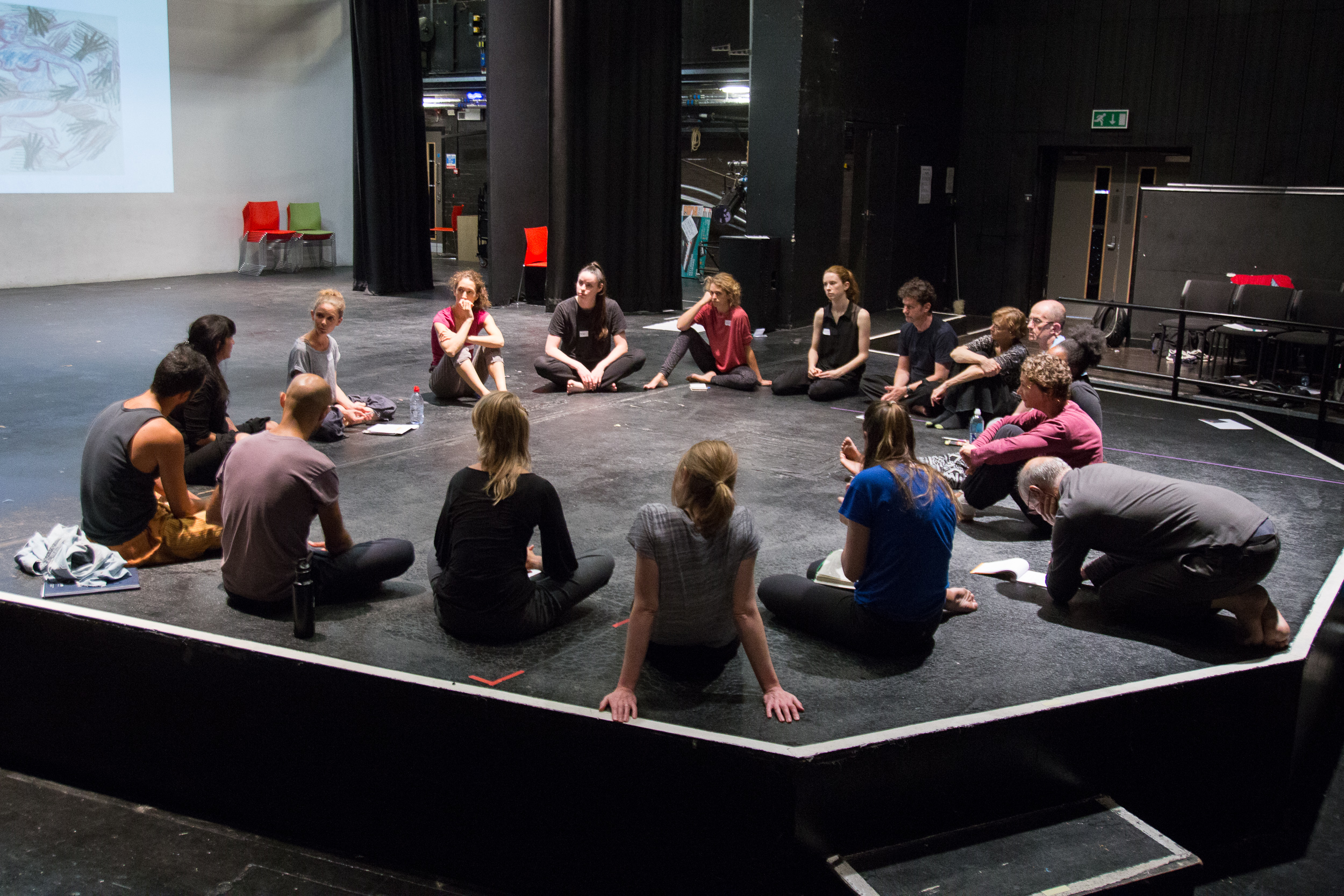
New Pathways 2016 (Image: Katerina Kotti)
Establishing The Chekhov Collective UK
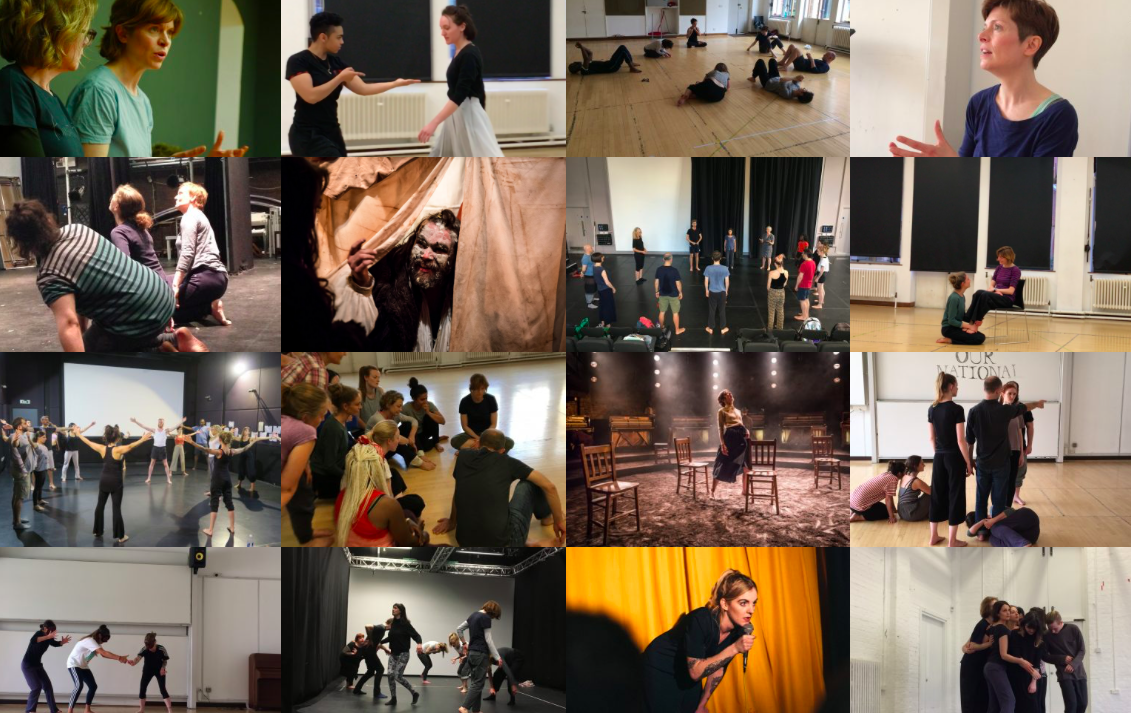
A section of the Chekhov Collective UK’s events portfolio
In 2016, I became co-director of Cass Fleming’s brain-child, The Chekhov Collective UK, and together with other TCC members we opened it from a research project to an accessible space for collaboration and exchange. It is now a leading practice research centre on Chekhov technique and the innovations and experiments the technique inspires.
An ongoing, living and breathing engagement with these diverse applications of Chekhov technique can be found in the workshops and events run by The Chekhov Collective UK. The encounters with other artists and perspectives through these workshops continue to feed and enrich my research.
Deepening connections: Ongoing learning in Chekhov Technique
Over the past years I have been fortunate to connect and collaborate with, and learn from, a host of excellent Chekhov teachers and practitioners from around the world.
This includes a two year training and teaching certificate with the Michael Chekhov International Academy in Berlin; training modules with Michael Chekhov Europe; summer schools and collaborations with MICHA (the American Michael Chekhov association); being selected, with Dr Fleming, for the MICHA Scholar’s Lab for 2019 (deferred to 2022 due to Covid); and being part of the Michael Chekhov Teacher’s Retreat in Groznjan, Croatia in 2018.
A vital part of my ongoing learning is my own teaching practice. At the University of Kent, UK, I incorporate Chekhov technique across undergraduate Physical Theatre and devising modules, as well as on the MA in Physical Acting, for which I am programme lead. My students are brave explorers with me, and I learn from them constantly.
Research background: Driving questions
As a teenager taking dance and acting classes, as an undergrad student in theatre and performance, as a postgraduate student in Movement Studies, as a lecturer and practitioner in embodied theatre practice, as an associate editor for the Theatre, Dance and Performance Training journal — throughout all this time I have been in search for an approach, a form of training, a practice, that is able to bring together acting and dance.
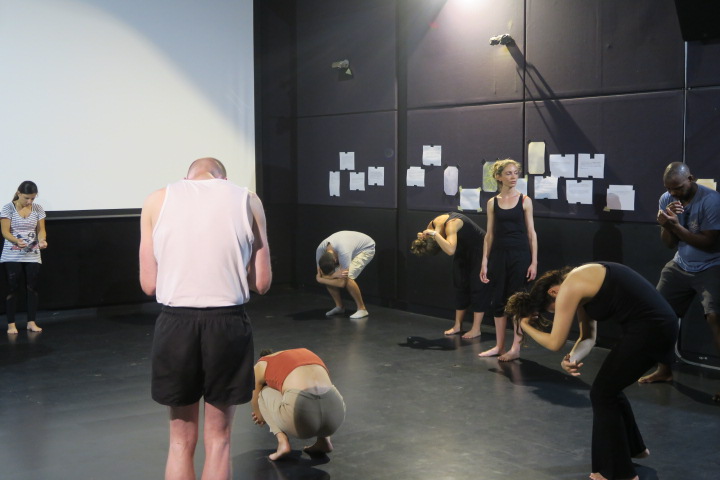
Image: Louisa Harvey
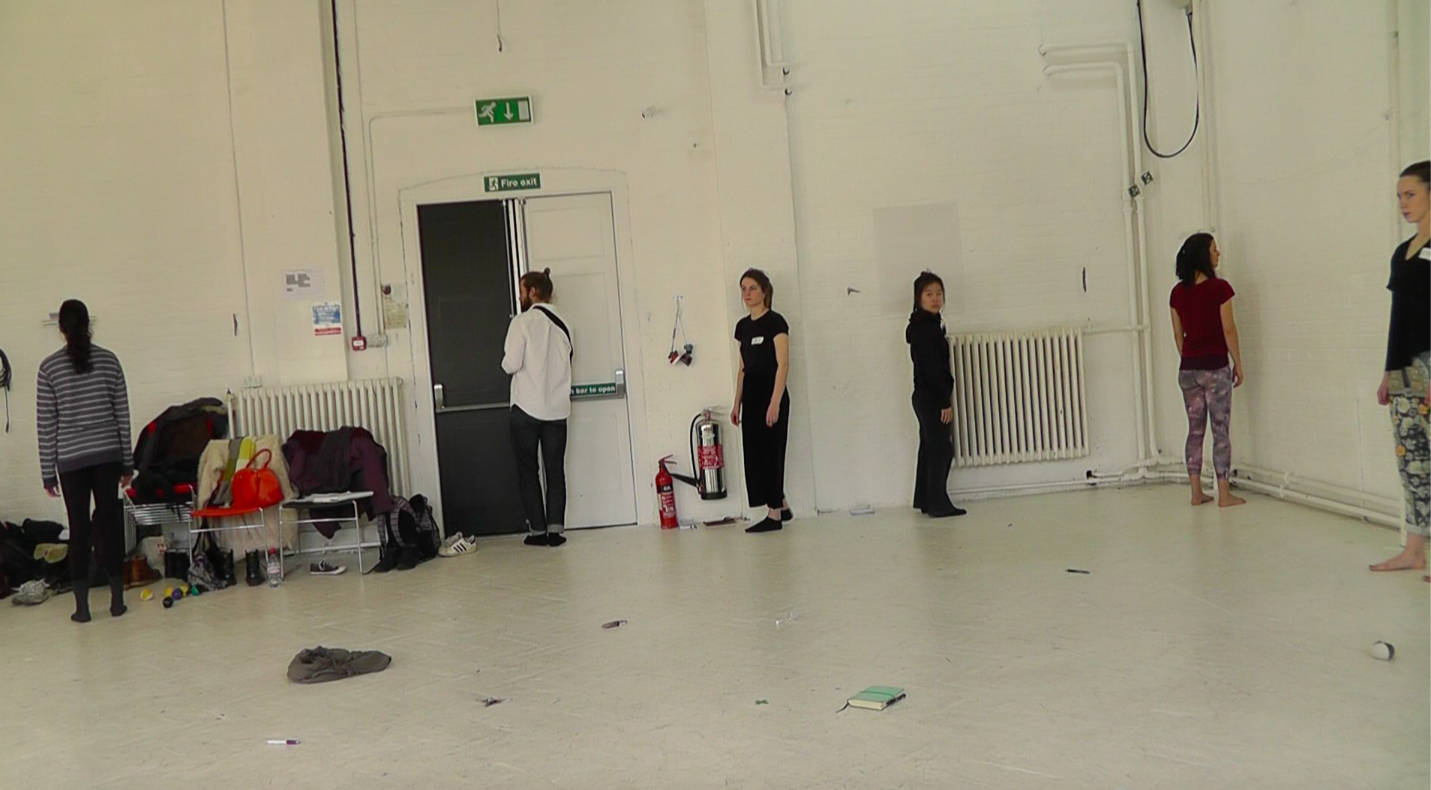
Image: Richard Davenport
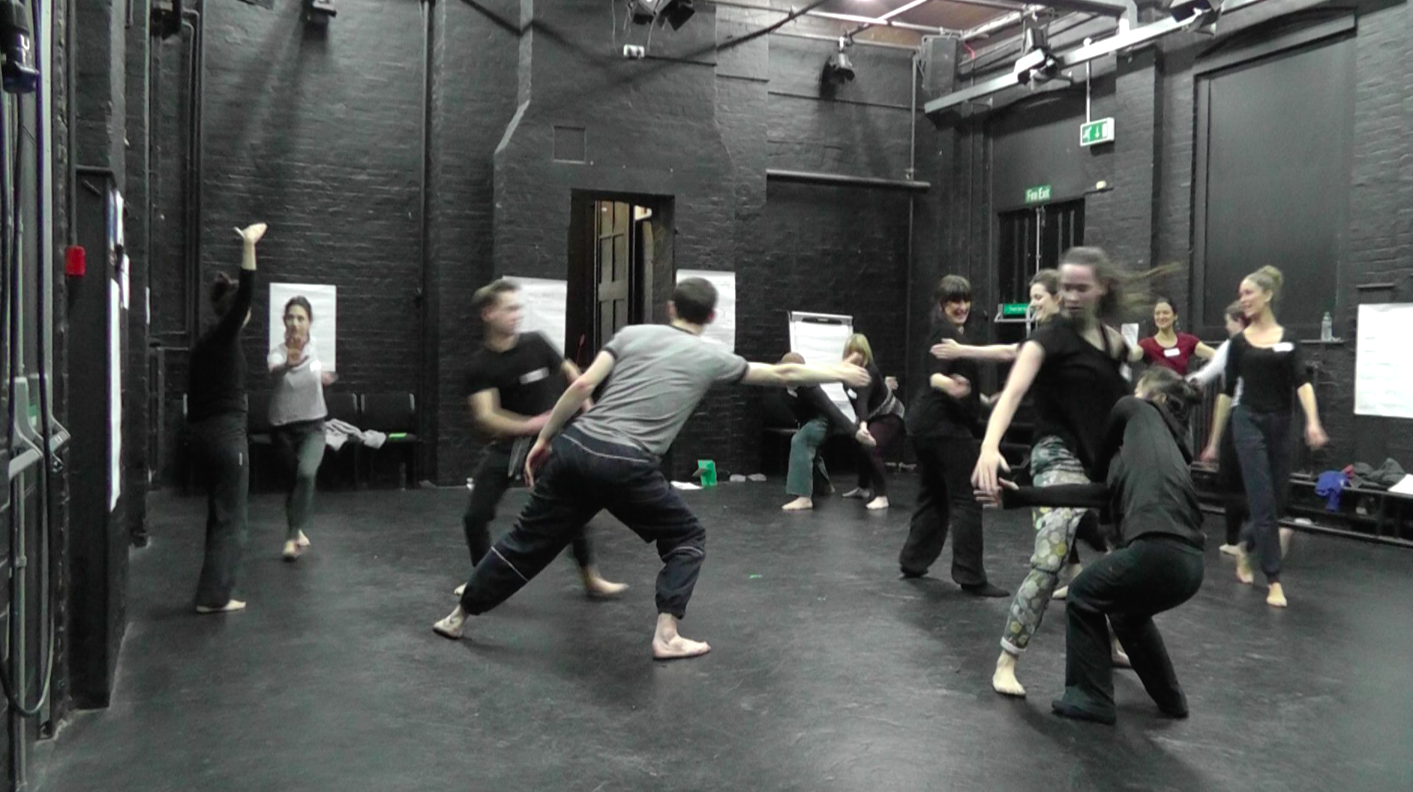
Image: Sandra Djukic
I have always been most excited by performance work that truly integrates the two, and I have been fascinated by the fact that training programmes that do so are few and far between.
Dance and movement practices that I have trained in and explored include: MA in Movement Studies at RCSSD, UK (various); Contact Improvisation (various); English country dancing (Cecil Sharpe House); Jacques Lecoq mask and devising (LISPA); Dance theatre (Les Ballets C de la B); Movement Masterclasses (RCSSD ICM); Swing Dance; Contemporary Dance; Contemporary and Traditional African Dance (Germaine Acogny, L’ècole des Sables, Senegal); Ballet (RAD syllabus 1986-2005), Tap, Jazz (Joop van den Enden Academy, Germany); Yoga; Stage Combat (BADC), Contemplative Dance (recent initial explorations).
My experiences and experiments with Chekhov Technique have led me to argue that it facilitates work in the crossover, and to consider questions such as:
What does Chekhov Technique offer the dancer?
What are the historical dialogues between Chekhov Technique and dance?
How is Chekhov Technique already being used in dance training contexts?
How do dancers and choreographers in the contemporary moment respond to, harness, and/or develop aspects of Chekhov technique?
What does Chekhov technique offer for rehearsal processes in the dance-theatre crossover?
How is Chekhov Technique already employed within drama-school structures, across movement- and acting classes?
How might it be employed even further within drama-schools that aim toward holistic performance training?
In asking these questions and pursuing the research, I aim to advance contemporary developments towards holistic training and cross-disciplinary making processes, both in the respective fields of dance-training and actor-training, and in the multiplicity of making-practices that look to combine the two.
Key discoveries regarding Chekhov Technique and Dance
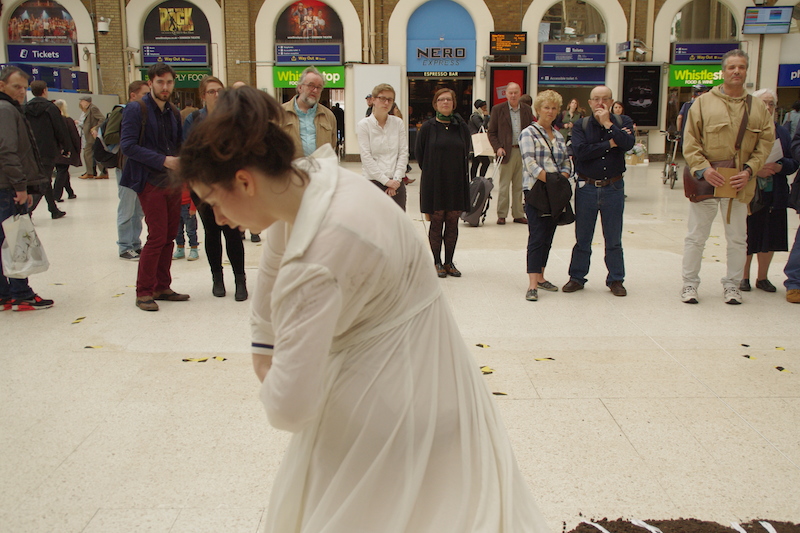
Through the Grapevine (2014) Image: Frédéric Zajderman
Chekhov’s technique takes movement as its starting point, and can be used effectively within dance-training, dance-making, and within practices that seek to integrate acting and dance.
Its strengths lie in:
activating the mover’s inner life and imagination;
providing creative structures for movement improvisation that focus on play and reduce self-consciousness;
harnessing dancers’ existing expertise on subjects such as form, gesture and direction in space as an entry into acting-moments;
offering easeful means of treating voice- and text-work as part of movement expression;
functioning as an effective shared language for collaboration between actors and dancers/movers in rehearsal-and making processes.
A further strength lies in its propensity to be blended with other techniques — not least due to Chekhov’s own insistence on creative freedom — and provide ‘bridges’ between different areas of performer training. Blends explored in my own research and practice include: Chekhov and Lecoq; Chekhov in Viewpoints work; Chekhov and Laban; Chekhov and Yoga; Chekhov and Contemporary Dance (Cunningham; Forsythe).
Chekhov’s technique is embedded in a rich web of dialogues and intersections between acting- and dance/dance-mime practices in the early twentieth century. These include direct encounters (e.g. with Isadora Duncan, Uday Shanka, with dancers and teachers from the Jooss/Leder School of Dance at Dartington such as Lisa Ullmann, and probably with Laban), and indirect influences through Chekhov’s collaborators, drawing in the practices of Mary Wigman, Margaret Barr, and Martha Graham.
These dialogues and intersections are worth re-membering and investigating, to help understand the potential of the technique in dance practice, and as a means to move forward with the contemporary impulse to find shared languages and approaches for embodied performance across acting and dance.
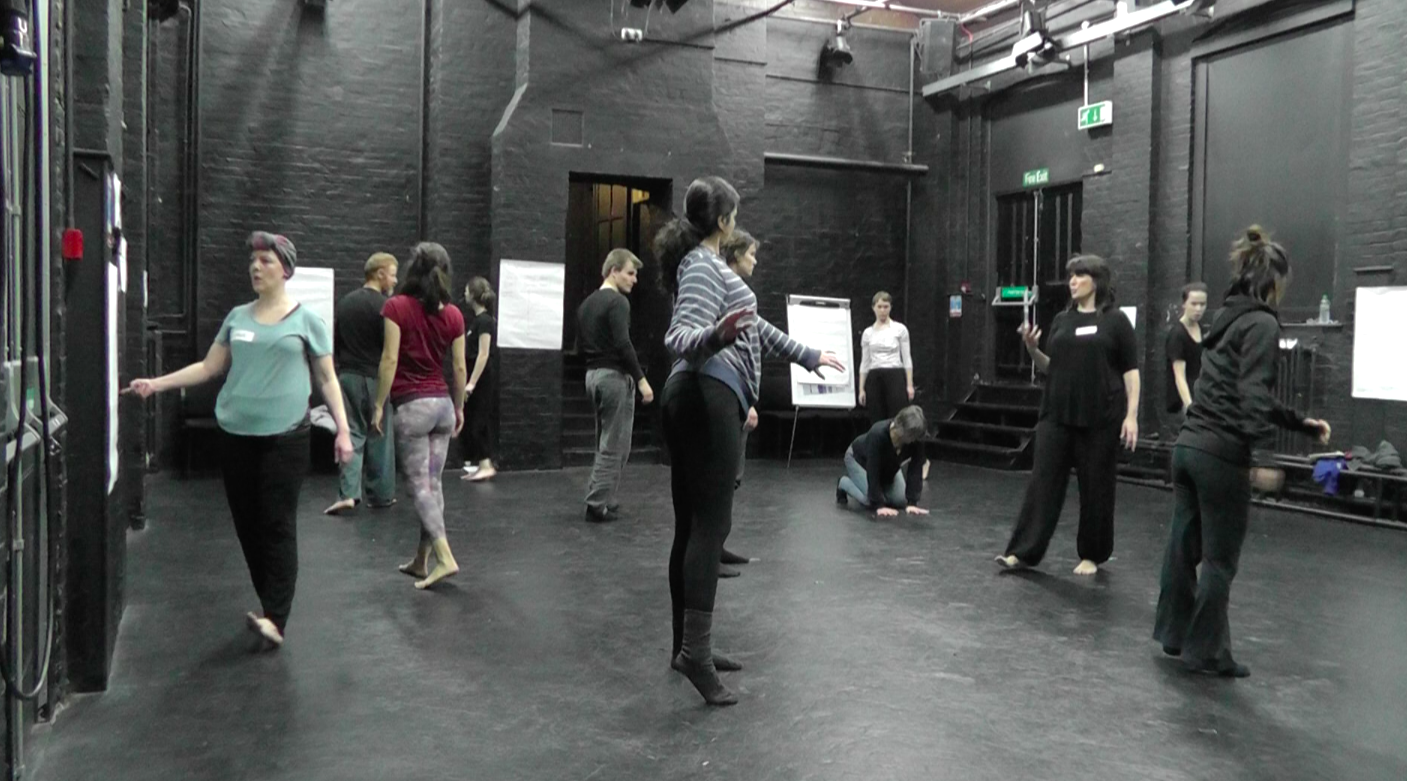
From 2018-2019 I ran a series of Chekhov Collective workshops on expressive techniques for dancers in interdisciplinary contexts:
Acting in Dance: Qualities of Movement (Goldsmiths, 25.11.2018)
Expressive Techniques for Dancers I : Preparing for Interdisciplinary work (Chisenhale, 9.7.2019)
Expressive Techniques for Dancers II : Gesture (Goldsmiths, 26.10. 2019)
Participants had a range of training backgrounds across dance, movement direction and circus, and were variously teachers, performers and makers. Most had little or no prior experience of Chekhov technique.
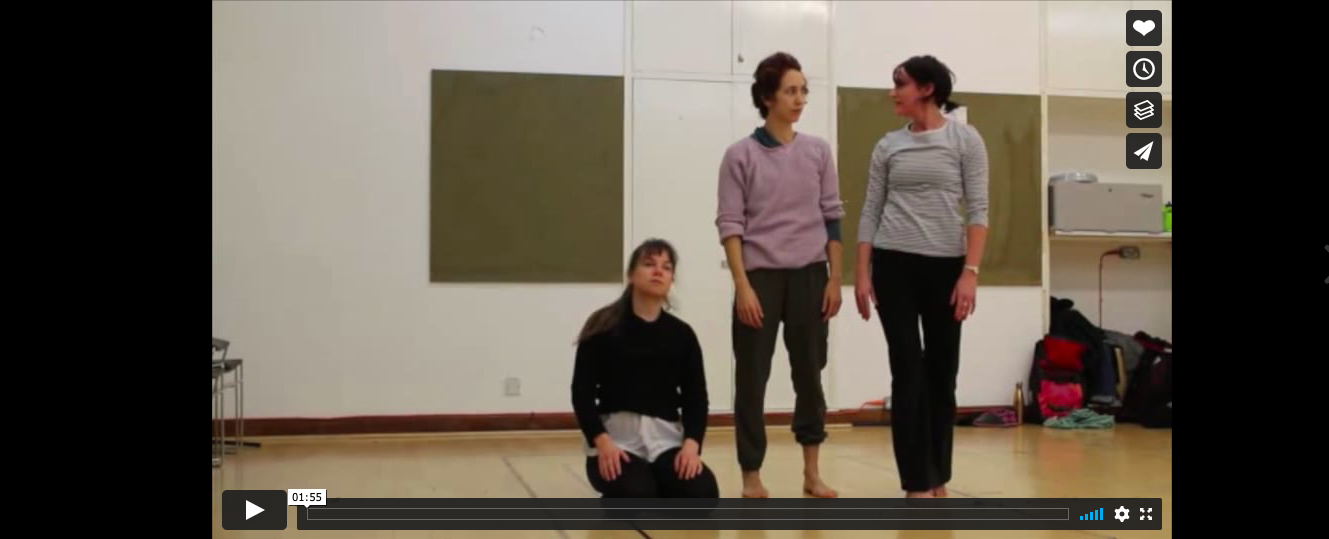
*Click Image to watch* Brief extract from Acting in Dance: Some workshop participants (Hannah Junti, Viola Bruni, Nancy Kettle) working in a simple choreography with movement qualities and shared atmosphere, and with shifting internal-external attention (with credit to Anna-Katharina Andrees for inspiring the choreographic frame).
These workshops drew mainly on the approaches of ‘dancing actor’ Michael Chekhov, as well as making links to the work of Jacques Lecoq and Rudolf Laban.
Rather than asking the dancer to set aside their expertise and step into unfamiliar ‘acting’ shoes, the work explored how we can achieve acting moments in performance by starting from a dancers’ expertise. It offered participants tools for their next interdisciplinary project, and/or allowed them to discover further layers to their dance practice.
In experiments involving movement qualities, atmosphere, and gesture into voice, we explored applications of the technique in simple scene work, in abstract choreography, and along the spectrum in between.
Feedback indicated that these workshops held various functions for different practitioners, including deepening existing knowledge, providing new perspectives on their field, generating new movement material, and discovering new ways of working on existing material. Importantly, the feedback suggests that participants felt equipped to play with the technique freely and develop it according to their own creative impulse.
“I found some movement for a performance I am doing next week (circus and dance performance) and in the process of practicing it again I realised where I was being water, clay or air. I also tried to mix two elements in my body but locating them in different parts. I will also see how the elements explorations can be used for teaching or coaching.”
“Thank you!!! I learn so much with you each time, this workshops are invaluable for me. At the beginning of my movement director journey I couldn’t understand what theatre movement really was, coming from more dance and acrobatic practice and very little theatre. Workshops like this really help and I want to invite more people.”
“I think the workshop has given me tools to access in auditions and the freedom to let the quality speak and not feel inhibited.”
“Going forward the workshop will enhance the way I look at dance when I create and teach movement.”
2. Chekhov meets Cunningham
Image: Stephen Wright
Between 2015-16 I spent time in the studio with dancer Julie Cunningham and their company, introducing them to elements of Chekhov Technique alongside some of my own inventions based on movement work with actors. Alongside our pure creative curiosity, another aim for this work was to find out what elements of the technique Cunningham would want to adopt, and how these were developed and adapted for use in making and transmitting choreography.
Julie Cunningham is dancer of great sensitivity, inventiveness and creative capacity, whose exquisite technique and presence has earned her the title of Outstanding Female Performance Modern at the National Dance Awards, for Michael Clark Company’s New Work 2012. Following years training and performing with Merce Cunningham’s company and later Michael Clark Company, since 2015 Julie has been creating their own work, amongst other things creating radical experiments with dance and text. The latter include To Be Me, set to selections from Kate Tempest’s poetry collection Hold Your Own (Barbican, 2017), and their staging of Sarah Kane’s Crave with four actors and four dancers (Barbican, 2018) co-directed with Joyce Henderson (Associate of Complicité).
Julie is also a colleague and friend, treasured by me, amongst other things, for the interest we share in the politics of silenced performing bodies that are trained to serve, and in the creative potential between dance and acting/performance.
Interview with Julie Cunningham
In 2017 I interviewed Julie, asking them to reflect on how our work together shaped their approaches to dancing and dance-making.
R: When we worked together in the studio, we explored particularly the idea of play and imagination in movement, looking at movement qualities, atmosphere, and gesture. Has any of those explorations found roots in your work?
J: I work with movement qualities all the time now, so not just asking people what movements to do but also asking for certain qualities, which then also creates rhythm. For example I might ask for a loud or a quiet quality, finding the difference between crawling loudly or crawling quietly. I also work a lot with falling, with a quality of falling. And with breath — asking the dancers to experience what the in-breath feels like, and putting that into the body. Generally I am asking people a lot more to imagine, which I guess is always there but I am being more explicit about that.
R: We have spoken before about your desire to facilitate real human contact within your ensembles’ work. Have you discovered new strategies to do so?
J: In summer 2017, working on the show for the V&A [for their site-specific piece A Line Is], we did a lot of work on that, I talked a lot with them about it being real and where we are right now. Asking them to focus on being here, not far away and other-worldly. This was about framing the work as functional: we are going to work on a task, approach the movement as a task. This also helps the dancers be more responsive in the moment.
R: And atmosphere comes into play with this..
J: Yes. At the V&A, for each of the sections, we would improvise to discover what that particular part would be, finding what its shape is, what its quality / energy is, what the atmosphere of each part is. For me this is about where we are focusing, how we are attending to ourselves, each other, and the space around us. These improvisations also let dynamics in space and time emerge, and this happens simultaneously with discovering the atmosphere. So I might for example say ‘this bit is light and it goes around, so can we try moving around there in this lightness’. In these improvisations the dancers are attending to what is happening in the moment — and then I ask them to maintain that now-ness even in performance, to not go into a more distant performance-mode.
R: You also continue to teach. What do you consider as the challenges and opportunities in dance training, in light of your recent discoveries?
J: Dancers are not really trained to keep searching, they are trained to learn material and then do it really well. Some dancers will learn the movement and then consider their job done. And this can happen with really high-level professional dancers. Often they are the ones that are more classically trained. And then there are a few that keep searching and asking, and those are the really exceptional ones… You have to have a genuine interest in movement, not just a focus on achieving virtuosity or looking nice. I just taught a class in Switzerland, and I was supposed to teach Cunningham but the students were not engaged, and so I told them the work is too precious to be treated like this, tell me what’s going on. And they told me they were bored. We went around and each of them told me what they were working on in their solo, and I told them, there you have your questions. Each of you is looking for something, investigating it. You have to find the thing you’re interested in, and then keep always looking for it, in all your classes. Because that’s what ultimately will make you an interesting artist and individual. But it is not obvious to them that this is even possible, that you can do your research and inquiry every day within the required teaching.
R: So how are you passing on these principles in your teaching?
J: I taught at Rambert and decided to introduce them to a bit of Sarah Kane’s Crave and do something different with them. First they read sections of the text, which opened them up about speaking, and found one word that expressed how this section made them feel. Not what they thought, but how they felt.. Then I introduced them to the elements/movement qualities, and we transitioned this into working with the quality of the word they had come up with. Here I asked them to see how that word moved them, and they came up with movement. Then they devised in fours, with their material and with the lines of the character, finding the movement in space and putting it all together. And I didn’t choreograph anything, they did it all by themselves, and they loved it and were so excited, and they were not at all concerned with reading/speaking.
3. Chekhov and Laban: Investigating the crossovers
Laban and Chekhov workshop at ‘Laban’s Philosophy and Theatre Practice’ conference, Athens 2018
Between 2016-2018 I undertook a series of practice-research sessions with Juliet Chambers to investigate the crossovers and dialogues between the practices of Michael Chekhov and Rudolf Laban. These included:
A New Pathways practice symposium (Goldsmiths, 2016)
An Open Space event, (Goldsmiths, 2018)
A conference workshop (Laban’s Philosophy and Theatre Practice, Athens 2018)
Juliet Chambers is a Certified Movement Analyst (CMA, Laban), and specialises in movement and embodied practices for Actors, Dancers and Movement Directors. Juliet is also the founder of the Labanarium, and artistic director for the Makings of the Actor. Juliet’s PhD research explores the intersections of Laban’s framework for movement analysis, spirituality and Authentic Movement, in the context of actor training. The Labanarium was conceived by Juliet as a way for practitioners, researchers, scholars, students, artists and anybodyinterested in human movement, to connect and to share their activities and experiences in discovering the potentials of the human moving.
The following emerges out of our dialogues and exchanges since 2016.
New Pathways praxis symposium, Goldsmiths 2016
Some of our key questions in exploring the Laban-Chekhov crossovers are:
What are the true similarities between Laban’s and Chekov’s approaches?
What is distinctive about each of the approaches?
What is the role of ‘spirituality’ in each approach, and how are we teaching/communicating that role?
How much is the similarity between the two dependent on the teacher/instructor?
What are potential conflicts between the theory and practice in each of these approaches?
Can each approach serve the other as a complimentary support/addition to embodiment and understanding of the other?
How does the use of each of approach differ when applied in rehearsal, making, or training processes?
Are the approaches different for actors and dancers – how/why/in what ways?
Chekhov Collective & Labanarium Open Space, Goldsmiths 2018
Our practical experiments in the sessions above included:
Atmosphere (Chekhov) and Inner States (Laban)
Breath work, the mysteries of the diaphragm and the etheric body (Laban) and Ideal Imaginary Centre and Radiating (Chekhov)
Effort quality (Laban) and quality and sensation of movement (Chekhov)
Sense-impression into posture, gesture, and posture-gesture merger (Laban) relating to energetic/life body and Psychological Gesture (Chekhov)
Efforts (Laban) and Psychological Gesture (Chekhov)
Basic Shape Forms (Laban) relating to Psychological Gesture and Directions in Space (Chekhov).
“As a dancer studying physical theatre now, it helps me expand my awareness as to how dancers or actors approach communicating and connecting in similar and different ways.”
“It has confirmed my belief that they are connected and I will find my own combination that works for me.”
Chekhov Collective & Labanarium Open Space, Goldsmiths 2018
Key findings
This exploration is ongoing; however, there are some interim findings from our experiments to date, which include:
Both Laban and Chekhov see their training systems as a Whole, where each part already activates all other facets. Consequently, it is limiting to try to definitively compare and relate distinct ‘tools’ from each approach to one another. For instance, engagement with Laban’s effort actions and effort qualities can be productively related to Chekhov’s movement qualities, atmosphere, or psychological gesture.
Bringing Laban and Chekhov’s approaches together helps to throw into relief and dismantle common preconceptions about each, for instance the associations of Laban’s approach with mathematical logic and Chekhov’s approach with spirituality and ‘airy’ imagination. Recuperating the spiritual and playful elements of Laban’s approach (Juliet) and the clarity, form and discipline within Chekhov’s (Roanna) has been a key part of the practice.
Both Laban and Chekhov celebrate creative individuality, and seek to ‘reveal’ an expressive body, as opposed to ‘making’ it. The more we explore, the more we come to understand the two approaches as interlocking in a myriad possible ways, each time dynamically shaped by the individuals who are bringing their creative individuality to interpreting them. Both approaches thus cannot be seen as objective entities, but rather are entangled with and shaped by a pedagogue or performer’s particular approach and cultural/socio-political context. This is in keeping with the notion for both Laban and Chekhov that the human condition and body is inherently expressive, where both approaches seek to ignite/reveal/draw-out the essence of expressivity held within the unique mover.
Related Publications:
Mitchell, R. (2020) ‘Chekhov Technique in Actor-Movement and Dance’ in Michael Chekhov Technique in the Twenty-first Century: New Pathways, eds Cass Fleming and Tom Cornford. London: Bloomsbury Methuen Drama.
Chambers, J. Phd Thesis title (2021): What are the consequences of reintegrating Laban’s Rosicrucianism into the practice of Laban Movement Analysis for actors in training and for their teachers?
Chambers, J. (2020)‘Figures: Rudolf Laban’ in The Routledge Companion to Performance Philosophy. Routledge.
Chambers, J. (2018) ‘Recuperating Laban’s ‘secret religion’ into the practice of Laban Movement Analysis’. Movement, Dance and Drama, volume 37, No. 2. Laban Guild.
Chambers, J. (2006) ‘LMA – Movement Practice for Performance’. Movement and Dance, volume 25, No. 4. Laban Guild.
4. Chekhov in Physical Theatre Pedagogy
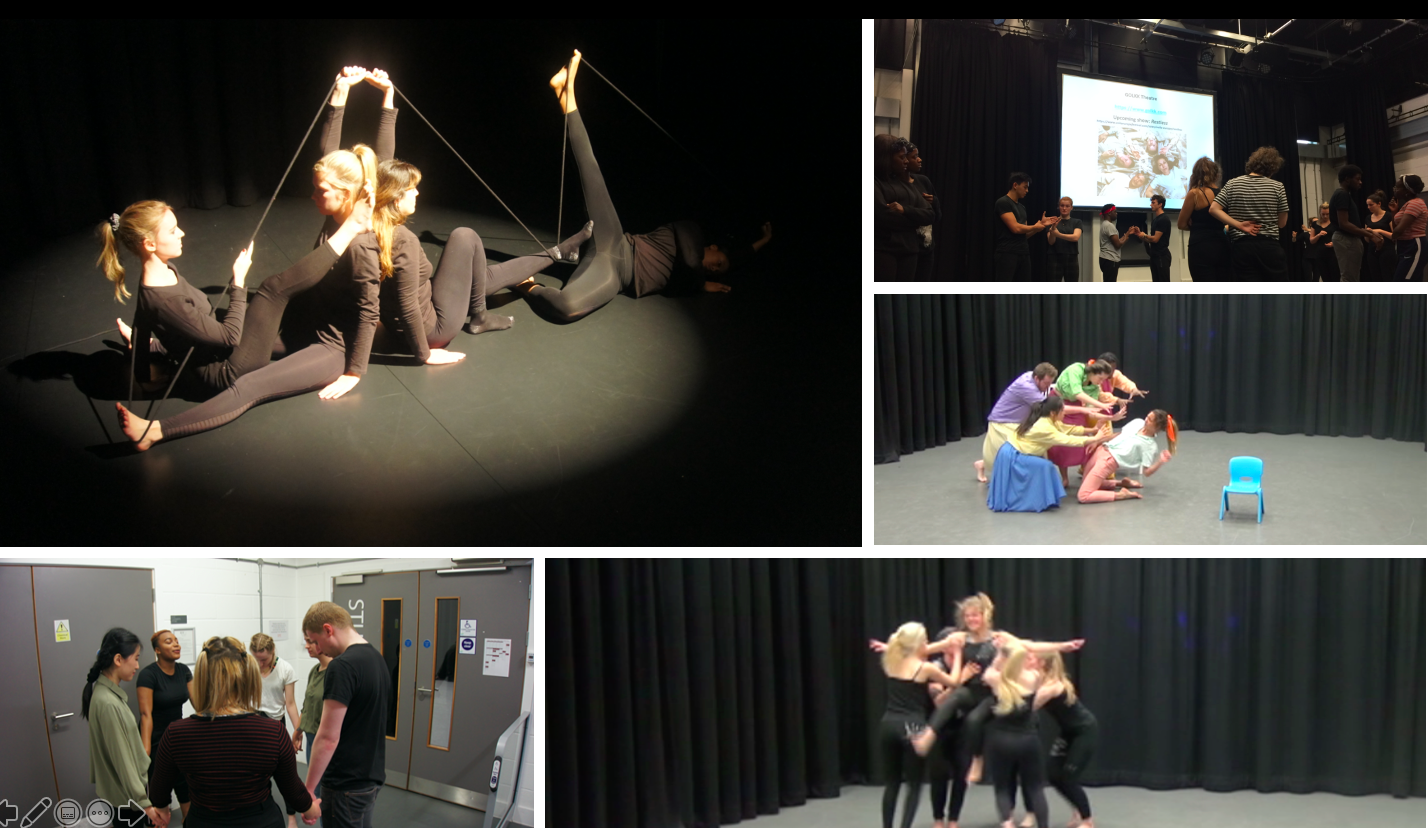
Physical Theatre students at the University of Kent, 2019
While I initially taught across conservatoires, universities and colleges for a number of years, more recently I have been firmly situated within a university context, specialising in physical theatre and physical acting across undergraduate and postgraduate courses.
Teaching within a university programme brings with it its own challenges and opportunities. Amongst the opportunities is the chance to integrate practice and theory and engage students in critical thinking about their practice and historical contexts; amongst the challenges is the time limitation, with most modules running across 12 weeks, with around 6 contact hours per week in which to deliver both theoretical and practical learning.
Autonomy
The latter, time, is one simple but key reason for firmly embedding Chekhov technique in my practical teaching. My aim as a pedagogue is to provide students with approaches that, within the given time-frame, they can grasp, understand in an embodied manner, and feel enough ownership over to be able to play with, develop, and creatively apply in their independent work outside of classes.
Overviews and introductions of certain subjects at university can result in students ‘tasting’ many ideas and approaches, whilst at the same time feeling that in order to use them for themselves they would need to go and complete a full training programme in a particular approach. While of course this is always a desirable objective — for Chekhov technique or any other approach that resonates with a student — in my experience the intuitive and adaptable nature of Chekhov’s technique means that students can experience dramatic developments in their expressivity and creative work after the introduction of even just a few of his ‘tools’.
A spine
Over years of experimenting I have thus gradually allowed Chekhov technique to form the ‘spine’ of my teaching, weaving it into aspects of movement fundamentals and movement expression, ensemble-building, devising and improvisation, and composition.
Along the way, Chekhov’s tools are blended and/or contrasted with other movement approaches, such as Contact Improvisation; Bartenieff movement fundamentals; Lecoq’s elements, materials, dramatic territories and principles of play; Bogart’s Viewpoints; Forsythe’s centres; Britton’s self-with-others; Laban’s effort actions; Grotowski’s plastiques and understanding of impulse. They also are used within text-work, providing ease-ful ways to relate movement and words, for instance with links to Stanislavski’s objectives, actions and activities, through play with vocal dynamics and qualities harnessing Laban and Chekhov, and to Stephen Jeffrey’s perspectives on playwriting. Chekhov’s tools provide us with a familiar ‘ground’ to stand on for each new exploration.
Physical Theatre and Physical Acting students at the University of Kent
Benefits
Students exploring their own approach to, and understanding of, embodied theatre practice with the support of Chekhov technique, even within a short time span tend to:
Inhabit their distinctive creative individuality and imagination
Move and vocalise less self-consciously
Develop specificity in movement and nuance in movement quality
Develop the ability to connect with fellow performers and the audience
Develop a sense of ensemble responsibility
Recognise and welcome their individual differences as fertile ground to expand from, and return to
Grow the capacity to consider each part of their composition in relation to its Whole
Develop the capacity to work with a feeling of ease in response to fear, anxieties, and feeling stuck
Develop the ability to recognise and respond to their own needs as humans and artists (in connection with the latter, see also my work on the reflective mapping tool MACRO Map, designed to allow students to make connections between their growing creative individuality and other aspects of their life).
Teaching Chekhov’s principles also means teaching with Chekhov’s principles, as he himself so clearly articulates in his Lessons for Teachers (re-published by MICHA in 2018). Cass Fleming discusses this as it relates to directing, in her chapter ‘Theatre of the Future’ in Michael Chekhov Technique in the Twenty-first Century: New Pathways, eds Cass Fleming and Tom Cornford (Bloomsbury Methuen Drama, 2020).