‘Inappropriate’ Anger: Performances with Artist Partners
Many participants in the ‘Inappropriate’ Anger project (read about the project here) choose to co-direct and participate in our annual creative projects, which often take place in person in Canterbury, Kent.
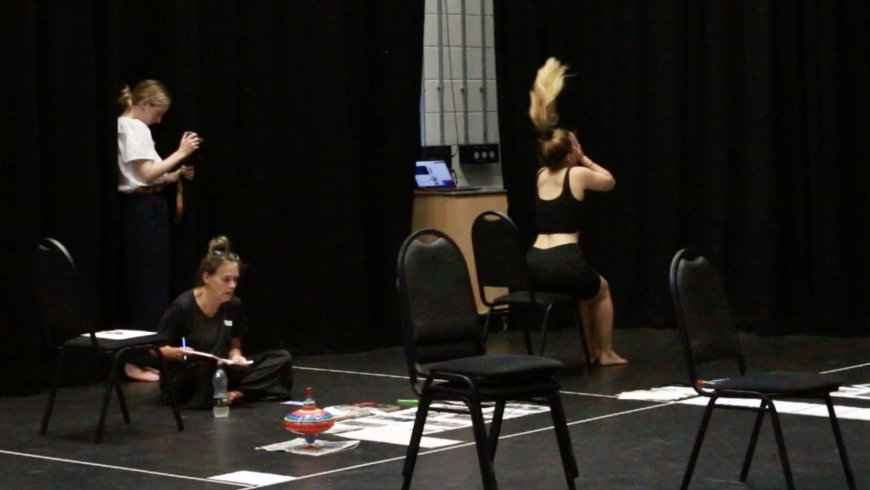
In the summer of 2022, our IA cohort joined up with a wonderful team of other artists to collaborate and make performance over one very full and joyful weekend.
Why work with other artists as partners?
One reason for this collaboration was that many IA participants would prefer to stay anonymous. So we wanted to experiment with ways of working that would give IA participants agency and creative say over their performances, without having to actually appear in the performance themselves.
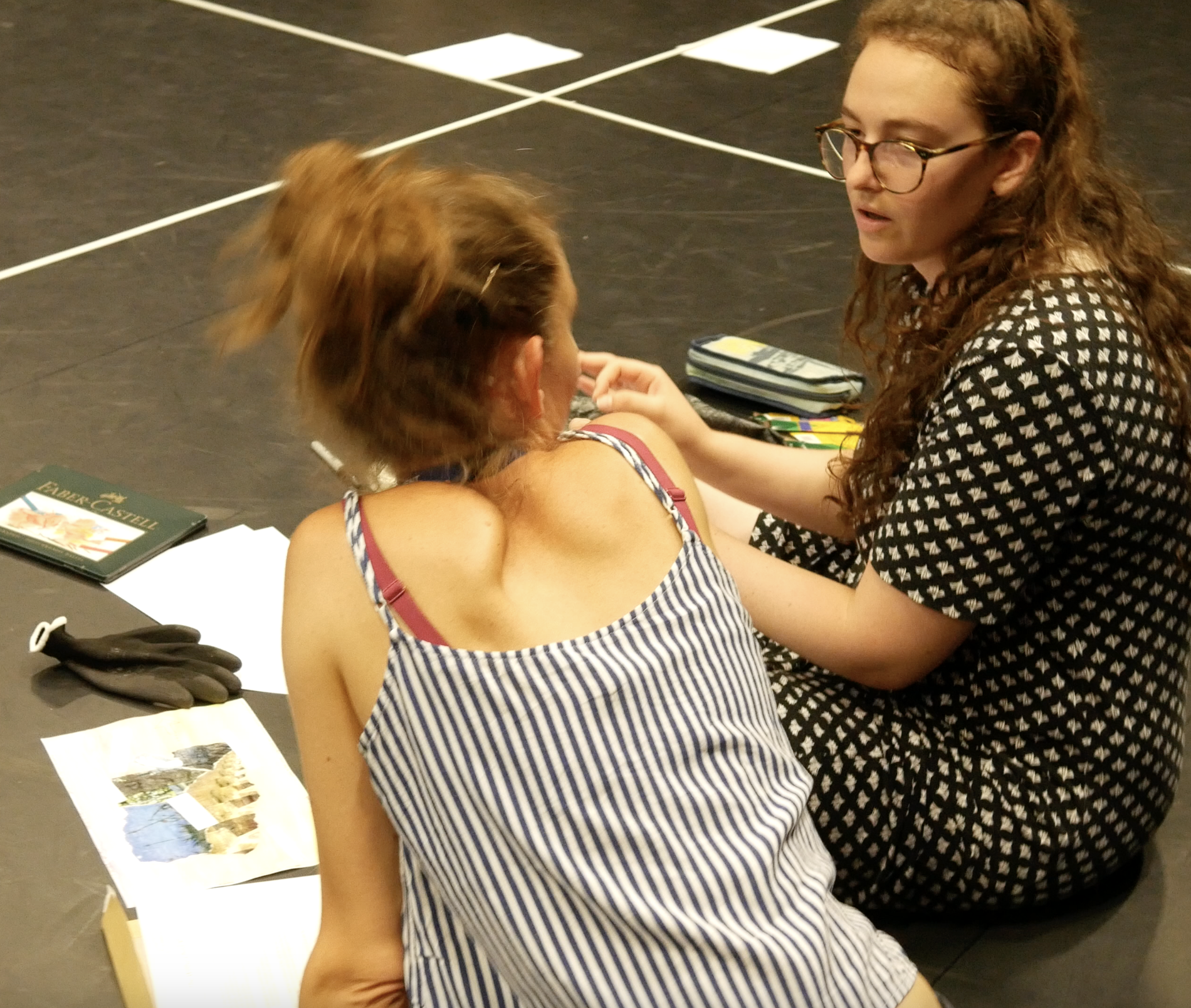
We selected a team of artist partners who are experienced in devising, collaborating and working in community, and with a range of specialisms including acting, dance, movement, songwriting and puppetry. Each IA participant was paired with one of the other artists to create work together over the weekend.
“The whole experience from meeting monthly to the weekend has been one of the most positive experiences of my life. Connecting with others, being creative together, seeing my art interpreted in such a beautiful way. I can’t really express how I feel except to say it has had a profound impact on my self esteem and my sense of self”. (E, 2022)
The collaboration between partners worked in a series of cycles:
The IA participants created a piece of art (writing, painting, collage etc) and offered it to their artist partners as a stimulus.
The artist partners created a piece of performance inspired by this stimulus, and offered this back to their IA partners.
The IA partners watched their artist partners, and then offered suggestions, changes, new ideas, alternative endings etc. By this point the pairs were working closely in a lively back and forth, exchanging ideas and trying different things out.
We ended with a showing of the final performances created by each pair.
“There was so much about me that Daisy captured in the performance. I felt excited, deeply touched and inspired by the final performance… I do feel the final performance captured something about what I was trying to say, the thoughts, feelings and words buried deep within!” (Minkie, 2022)
“It allowed me to risk holding it as my own story and not letting somebody take my story and moulding it into what they think it could, should, would be like. And that was amazing, I can really take that away with me. That actually it’s my story and my life and my feelings and thoughts, and I don’t have to mould them to somebody elses’, and I can — I have something to bring” (E, 2022)
Working in such a collaboration means that everyone has a chance to give their material to another person to hold, so that they can walk around it, see it from all sides, realise new things about it. Taking inspiration from each other means that the material becomes shared; a relational exchange happens, both people give and receive and thereby create a third thing between them — the performance.
“It was a really special experience, I absolutely had space to give input and mould her original ideas, It felt co-created which was empowering… The final performance was spot on, it communicated on a deeper lever what I had written and created” (Ruth, 2022)

Our methodology: Believing and being believed
Many details and methods went into structuring and facilitating this collaboration (I have written about just some of them here). The main and guiding principle for these workshops however was to give IA participants a three-dimensional experience of being believed: for them to give something of themselves to another artist and watch them not question, doubt or critique, but instead be inspired, curious, open and responsive. The BPD/EUPD diagnosis is closely associated with iatrogenic harm, limited access to appropriate support services, and frequent instances of being disbelieved or framed as ‘manipulative’, ‘attention-seeking’ or ‘demanding’ (Aves, 2022).
Having the experience of being believed by others, and re-finding the experience of believing oneself, are so important for the recovery from trauma. All of our working processes in the IA project are designed to facilitate and support this experience.
“… I somehow created a barrier for the hallucinations I experience, I think it was mainly because of the safety I felt, and the way we came in and out of the activities.… The safety I have felt making this huge step has been striking. I haven’t experienced this before”. (R, 2022
“I felt like a real person not someone putting on a mask. I gained some self esteem. I participated. I was brave. I was well supported. Many happy memories along side some tricky ones. I felt like this is me warts and all… Eventually I just relaxed, so there was no tremor, and no getting angry… I wanted to tell everybody how wonderful it was, and keeps leaking out, bit by bit. I was [at work] today, and I was full of myself. And I told people that I’d done this thing that was really amazing, and I think people noticed the difference”. (B, 2022)
“The first day looking at the big empty space and thinking holy shit. Oh my god, I can’t do that. And then the second day looking at the space and going: wow, this space is full of possibilities. And maybe I’m full of possibilities. That’s what it really made me feel…” (E, 2022)
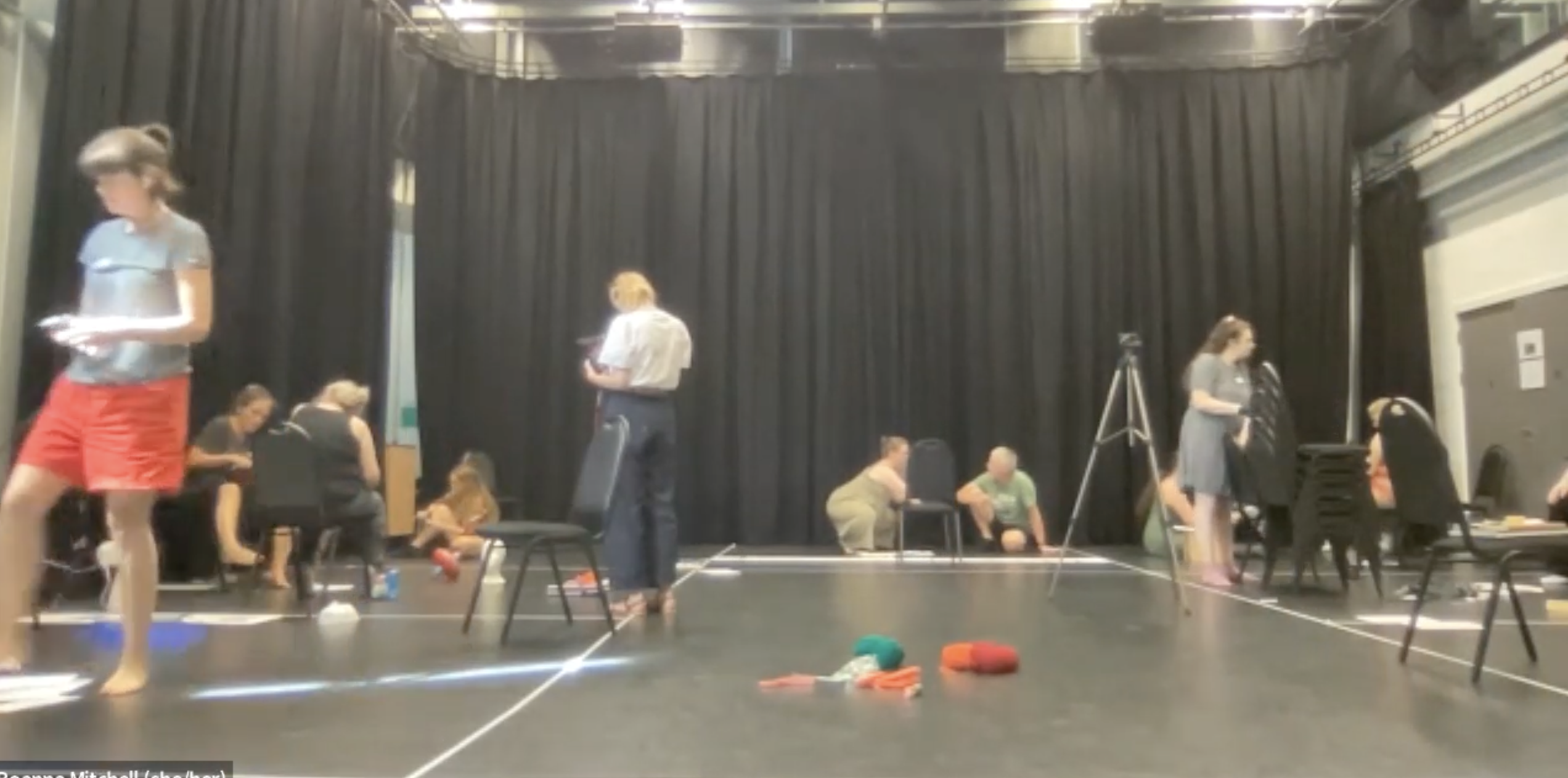
With huge thanks to the IA participants and artist partners who joined us for this project:
Eliza, Danae Paraskevopoulus, Laura Snowdon, Gretchen Egolf, Lady K, Minkie, Daisy Orton, Kay Norton, Jayne Thompson, Bryony, Elissa Nicholson, Ellie Levine, Ruth Hart, t0nkys, Becca Millar, Stacie Lee Bennett-Worth.
“I think it was probably one of the most impactful experiments I’ve ever witnessed. One thing I kept thinking about was how the framework you developed completely removed any hierarchy and how when I was watching the process – particularly the pairs developing the work together – it was definitely just two artists at work”. (Stacie Lee Bennett-Worth, filmmaker)