In 2024, ‘Inappropriate’ Anger is an ongoing project, consisting of creative workshops and projects run with and for survivors of BPD diagnosis (more info here).
Back in 2018 however, we did not yet know that that is what the project would become.
Below you can read the origin story of the project, and the ways it has evolved out of both life happening, and long periods of deep creative work.
What happened was this:
(TW: mention of self-harm, suicide, iatrogenic harm and SA).
2018: The Escapologist: Madness, poetry and storytelling
In 2018, with Louisa Harvey and a team of artists, I began a collaboration for an artwork called The Escapologist, exploring themes of madness and poetry and storytelling for survival. (You can explore more about The Escapologist here).
2019: Life happens to art: ‘Inappropriate’ Anger as a piece of theatre
By 2019, the more time we spent on the research and development for The Escapologist, the more a new, specific theme pressed itself into the foreground. All around us, loved ones were suffering, failing to be helped and dying, in close connection with their diagnosis of Borderline Personality Disorder (BPD) or Emotionally Unstable Personality Disorder (EUPD)
We decided that what felt most urgent and immediate for us to do was to make a piece of theatre that would explore the lived experience of people who hold this diagnosis, the lack of help available and the iatrogenic harm that it can cause. A piece of theatre that would honour those that have died, lend voice to those who felt afraid to speak publicly about their experience for fear of repercussions, and give space to the rage we felt in ourselves and others.
Quoting and re-appropriating one of the symptoms used to diagnose BPD, we decided to call this piece of theatre ‘Inappropriate’ Anger.
2019/2020 Beginning to make a performance
In late 2019/early 2020, we began work on this piece of theatre. We wrote:
Inappropriate Anger is a devised co-production between us (a creative team with lived experience of madness) and other survivors, illuminating what it means to live & access care with a diagnosis of Borderline Personality Disorder (BPD).
This is urgent subject-matter given the levels of iatrogenic harm and neglect associated with the diagnosis (Inquest 2019, TW suicide), and the need for service-user perspectives to help structure future care provision (Royal College of Psychiatrists’ Position Statement, 2020).
Our mission is to co-create work that empowers survivors by centralising and legitimising our experiences, sees creativity as key to exploring them, and helps reveal their complexity through movement, live music and poetry.
Image: Louisa Harvey
We planned to involve groups survivors of BPD diagnosis through interviews and in the rehearsal process, and set up partnerships with Poplar Union, Core Arts, the University of Kent and the Chekhov Collective UK.
We began some initial R&D work, bringing on board the brilliant musician and composer Laura Snowdon, who began to develop performance scores with us live in the rehearsal process — music, movement and text were written simultaneously.
Below is a tiny snippet of early improvisation stages in 2019, with Laura on Guitar, beginning to explore the story of Medusa and connections between trauma, the BPD label, and ‘inappropriate’ anger:
After Medusa was raped, she lost her head.
They took it, and used it as proof that she should not be looked at directly. That she was calcifying, wrong, that anyone who looked at her face would turn to stone. In the steady grasp of her gaze, the world, they said, would stand still.
Her body, meanwhile, went on living, multiplying into rage, transforming landscapes. Its liquid and bones became winged horses, coral reefs, desert vipers full of poison, her fury was in the curve of the seashore and the shaking of the mountains, her grief reached the depths of the deepest ocean floor.
The Gorgon was made out of the terror, not the terror out of the Gorgon.
2020 onwards: Life happens to art again — Launching ‘Inappropriate’ Anger as it is today
In February 2020 we submitted the Arts Council application to help us realise the project — and then Covid hit. Arts Council funding halted, and the project came to a pause as we all stayed at home.
Banned to online interactions only, we nevertheless wanted to continue the project.
In May 2020, we set up a pilot series of creative workshops online, with participants recruited via the social media survivor community. In doing so, our pre-conceived ideas about creating a performance were set aside. We stopped focusing on working towards a performance ‘product’.
Instead, we focused on collaborating and co-creating with participants to make online spaces where creative exchange and discussion could take place; where participants could experience believing themselves and being believed by others, and have a resourcing place to be.
In this way, the ‘Inappropriate’ Anger project was born as it exists today. Together with participants we developed a working methodology that is rooted in the principle of radical believing, while also drawing on trauma treatment strategies, psychophysical performance training, art- and drama therapy, play-based practice and strategies to regulate the nervous system.
Between May 2020 and 2024 we have worked with 25 participants over three cycles of introductory workshops, many of whom continue to work with us. Participants join us via Kent-based peer support groups such as Megan and SpeakUp CiC; Kent and Medway Recovery and Wellbeing College; Porchlight; as well as via word-of-mouth and online survivor communities.
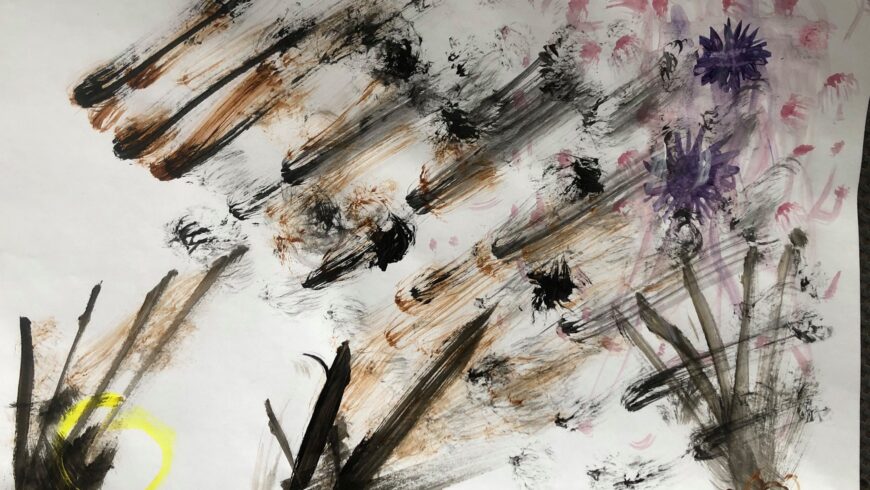
D (2020)
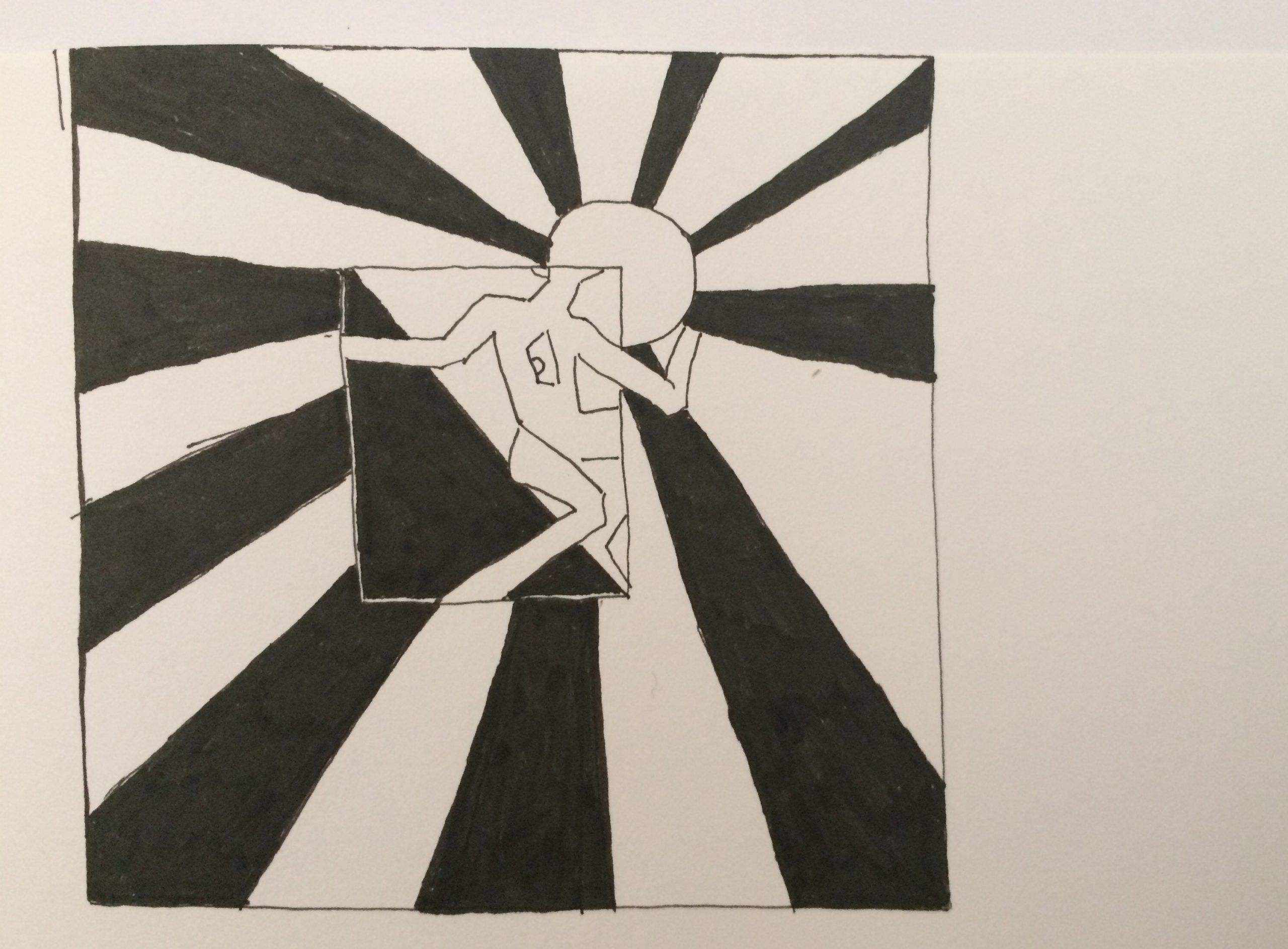
Bunny (2021)
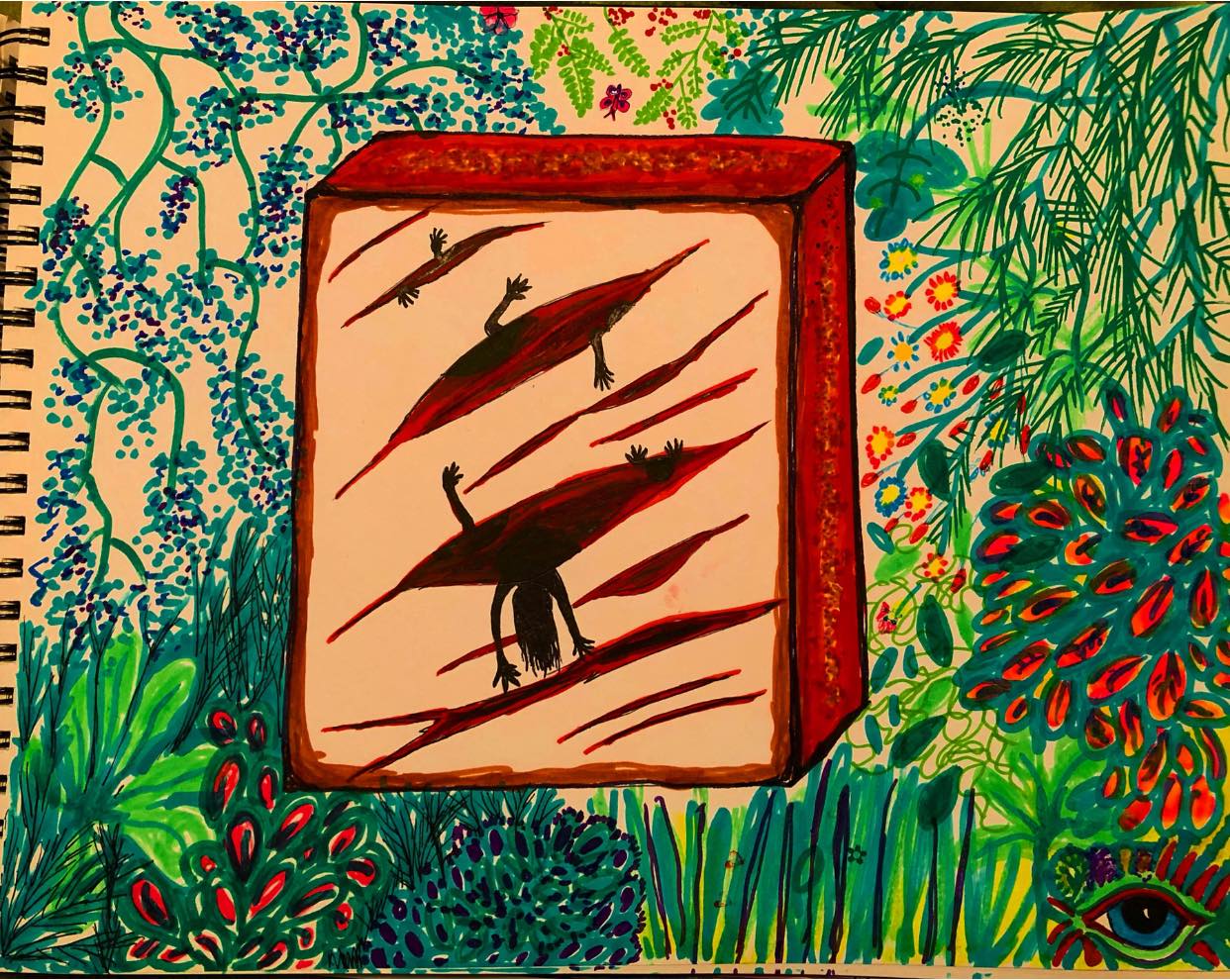
t (2022)
Research
Some aspects of the IA work are part of ongoing research, exploring the experiences of those with a BPD/EUPD diagnosis and evaluating the usefulness of our approaches in providing support and improving wellbeing/sense of agency/relationship with self and others.
Where our activities are part of research, participants are fully informed and given opportunity to give or withdraw consent. Any research activities are submitted to the University of Kent’s Central Research Ethics Committee for ethical approval.
You can read more about our publications (both by facilitators and participants) here.
Some feedback from IA participants:
“I want more , want to be able to access this all the time, like a book club , maybe monthly, how can we get funding?” (2020)
“I liked the setting up and stepping out of the session ideas. I felt if anyone was distressed, Roanna was brilliant at engaging and supporting them. As I’m not overly artistic, as in painting, modelling etc, I felt we were given freedom to be creative in our own way and this didn’t feel like failing”. (2021)
“I take away a positive impact – new self awareness, more aware of my patterns of behaviour, great to have a safe forum to use my voice, more aware of my need for increased self care, great to be affirmed in my creative work and to know my contributions could be making a difference to other people’s experiences of support going forwards”. (2021)
“I have begun to be kinder to myself as a result of taking part in these workshops”. (2021)
“I feel proud of my workshop creative pieces of work. It helped to explore a safe and healthy way of expressing myself, emotions, thoughts and feelings when words wouldn’t and couldn’t come […] It help me get me back in touch with my love of art to explore and escape my suffering”. (2020)
“I can do it, i am capable and i am stronger than i think. Also i have empowerment, greater understanding and feel more open to the hidden world around me”. (2020)
“I am more creative than i first realise. I achieved much more than i thought i ever could. The love of creative art is a great outlet release for me. Also i am not alone !!! There are others out there just like me” (2020)
“I think it’s important to see and hear both sides of the story but i feel for once it’s about US and should be mainly about our side and the pain and suffering. There is a great lack of understanding and support out there, lets shout about it and being greater awareness !!!” (2020)
“By exploring my creativity in the workshops process I have opened my mind to other ways of dealing with the negatives of the BPD/EUPD label”. (2020)
“I think the project has been very well organised with the tasks and workshops being well structured. The contributing artists have been treated respectfully at all times by the workshop leaders. It has been an excellent opportunity for BPD/EUPD label bearers to come together and explore the implications of their diagnosis’s. Thank you very much for the invitation to participate in the project and for what I can take forward from it”. (2020)
“Thanks Roanna for being so patient, understanding and willing to learn and grow with us. It has been a really healing experience for me to have that response from you”. (2021)