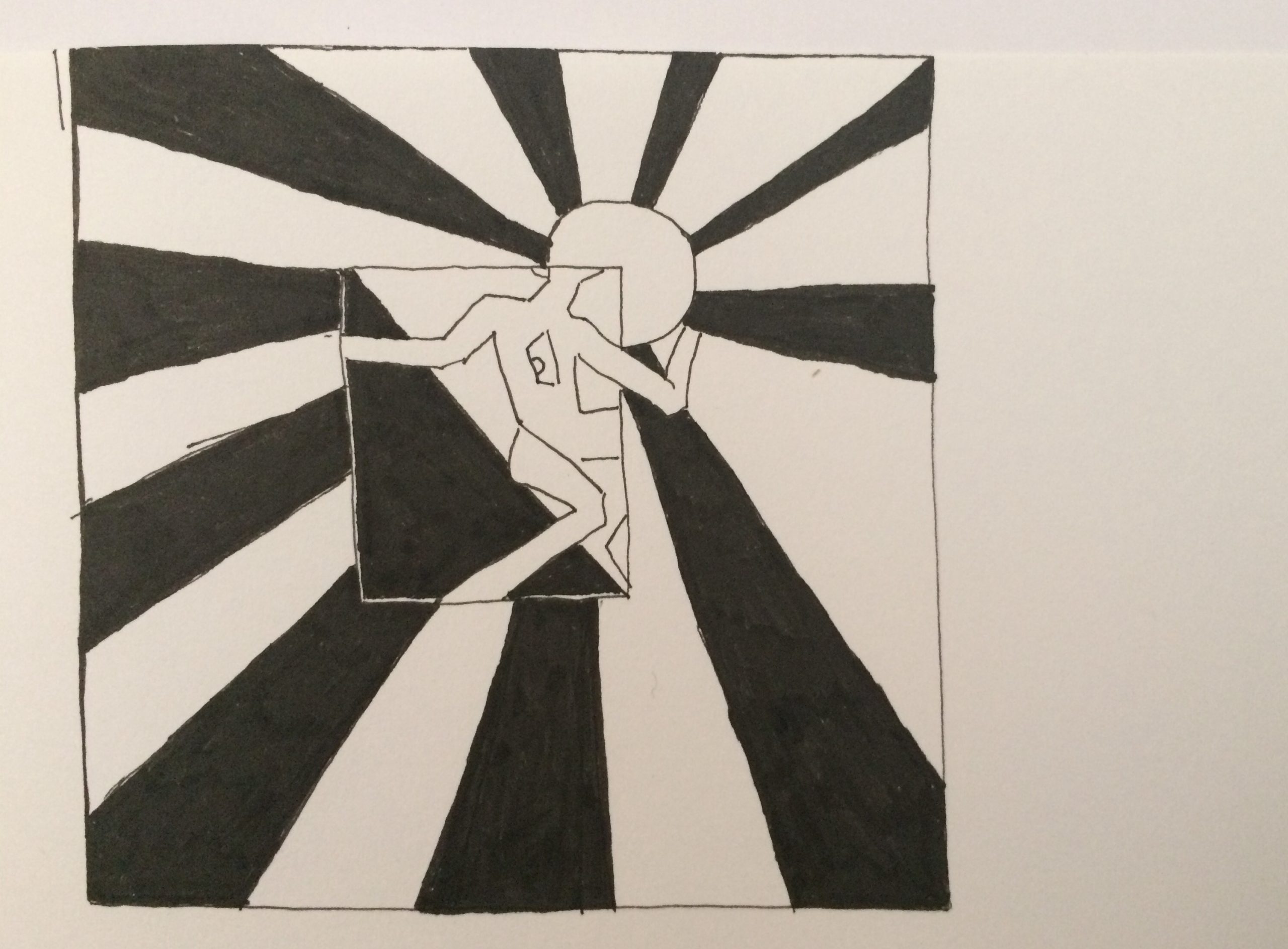
After twenty-five years of madness, I seem to be encountering the other side of it. I’m not sure what this place could be called; the idea of wellness sounds static and as if some destination has been reached, but it hasn’t – we are each ever-evolving, in flux, full of potential. It is my belief that madness lives in each of us, whether it be the everyday versions such as being in love, being angry, and/or experiencing grief, which are tinged with a feeling of being unhinged, or whether it is the kind that is pathologized. I believe all madness can be understood to some degree. It has meaning. It has context, history, stories, and metaphors to it. Images that can bring it to life for another and make it seem less irrational than that which is seen through a disease-model. This is my attempt to make sense of it.
E. Higgins
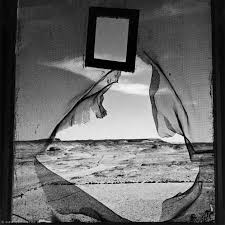
Portrait of Space, Lee Miller (1937)
The following entries give some snapshots of the development of The Escapologist from September 2018 onward, charting the ideas, encounters and discoveries made along the way. This is a piece about communication, about signalling from ship to shore, about poetry and storytelling for survival, without the compulsion to find neat resolutions. A piece, also, about forms of mental health treatment and what they do to you. This project is a work in progress, a labour of love, a survival strategy.
September 2018: Starting out
The symptom…if it works, if it becomes sufficiently unbearable, forces a person to recognise that he has projects. There are certain things that for some reason he really seems to want. The symptom traps one into recognising what is ultimately inescapable for oneself. Houdini’s Box: The Art of Escape by Adam Phillips
I commissioned myself to make this piece. [When and how do we give ourselves permission to make?] Having spent a summer dancing with madness, I didn’t feel I had a choice but to make. [Escapology: The art of escaping from restraints and confined spaces.] Having spent many years watching loved ones, friends, students, colleagues, slip into madness, there seemed so much to be said; so much to be listened to. As Phillips says in the quote above, our madnesses tell us about our projects — they force us to listen to what we want, what we need; both as individuals and as a society.
[Madness: All survivors participating in the project so far self-identify with the term ‘madness’, which we re-claim for ourselves while recognizing that this term doesn’t feel right for everyone. We embrace the term because it focuses not only on suffering and illness, but also takes into account the creativity and joyful experiences that survivors may have]
I am working with friend, writer and fellow activist LH. We collate survivor stories and begin with these questions:
What happens when the things we experience cannot be contained in one body or one discrete self?
What are the perils and the benefits of dancing with the mad parts of ourselves?
How can we communicate and be heard from a place of madness?
Where is the space for madness in our society?
October 2018: Escapologists I
The initial wish to escape is a form of recognition…it is because something (or someone) has been so powerfully acknowledged, so starkly recognised, that it must be fled from. (p.30) Houdini’s Box: The Art of Escape by Adam Phillips
We debate the impulse to escape and the impulse to be held, that paradox that so many of us hold in madness.
We talk about the many clever ways people have found to escape mental health institutions. We laugh at the hilarity, the slapstick nature of it, while knowing the desperation of the urge to have agency, to have air, to be free.
[When you have escaped, where do you run to?]
[When you are running without boundaries, what is to stop you from falling off the edge?]
[How can we feel held without being controlled and confined?]
We also debate the Escapologists that emerge in survivor’s stories: the parts of ourselves that escape in order to make themselves heard. The moments when you say ‘I am not myself today’. The moments when you act ‘out of character’. When you hear voices that are not yours, but belong to you. When you have intrusive thoughts compelling you to do things, that are not you, but that are yours.
We talk about what they know, want and need, those Escapologists. Clever, misguided bodyguards that they are, battling so hard for the Whole of us to have the right to exist.
October 2018: What is madness?
What’s madness but nobility of the soul at odds with circumstance? (In a Dark Time, Theodore Roethke)
We make our own list, and marvel at the theatricality of it:
living according to a reality that is different from how the majority of other people seem to perceive reality.
Not behaving according to social rules or adhering to social morals
Feeling intensely and allowing yourself to be governed by that feeling
Working/functioning at a rhythm and pace that runs at a different speed to what social expectations require of you — experiencing an acceleration, decelaration or suspension of time.
Being suspended in time — time changes, you suspend your life as you knew it.
The experience of two or more versions of your life existing simultaneously
The confrontation with the predator may be so intense that the animal preyed upon dies of stress. Wild rats have died of heart attacks after being forced to listen to a tape recording of a cat-rat fight (source)
Dictionary definitions of madness:
The state of having serious mental illness
Extremely foolish behaviour
A state of wild or chaotic activity.
Psychology definition of madness:
Mental illness of such a severe nature that a person cannot distinguish fantasy from reality, cannot conduct his/her affairs due to psychosis, or is subject to uncontrollable impulsive behaviour. Insanity is a concept discussed in court to help distinguish guilt from innocence.
While acknowledging different types of madness, we niggle, struggle with and refuse diagnostic labels, for their problems:
cause hopelessness
can infer moral judgment
ignore the potential creativity (see later post on interviews with psychotherapists)
decrease confidence
leave little to do but ‘take the tablets’
divert attention from underlying social and emotional problems
summary diagnosis can stop people from asking about events and emotions that underlie the problems.
A mad person can be left
isolated, frightened,
unable to work, unable to function
at odds with friends, loved ones and society
agitated
raw
despairing
suicidal
I don’t like diagnostic categories for myself. I respect those for whom they make sense and serve a purpose, but my experience of diagnoses is that they can be oppressive and lead to discrimination within as well as outside of the mental health system, which can and does kill people. Also, I have never felt that I fit into those boxes. That’s not because I am a unique snowflake (though maybe I am, just like you, and you), but because they are an arbitrary conglomerate of symptoms clustered together according to the patriarchal whims of (usually white) men in white coats. For me, madness connotes the extreme states of mind I have found myself in. My mind has disturbed me. I have been disturbed and have felt deranged. I have had altered experiences of ‘reality’ and have done things to myself that I did not want to do. Madness is a broader term, available to be defined as it suits each person, but with a sense that it means not everything is as it should be. E. Higgins
November 2018: Madness and its reason? The canary in the mine
I don’t buy the idea that biology is to blame for my madness. Sure, I may have had a constitutional temperament that meant I was more likely to be a sensitive child who felt things acutely. But, I think there are more psychosocial explanations for my distress than those afforded by a big-pharma-funded psychiatric industrial complex. What I do believe in is intergenerational trauma and distressing experiences that go unprocessed, unacknowledged, and filter through familial lines until there’s a ‘buckaroo’ moment. Repressed anxieties and experiences pass through one’s children, to their children’s children, and on, until the buck stops and explodes or implodes in one unfortunate individual who cannot contain it all. Some would say there’s an inborn weakness there, others would call me the canary in the mine. I prefer the latter, obviously, though my go-to feeling when vulnerable is that I made all of this up and there’s nothing for me to have gone mad over. E. Higgins
December 2018: Poetry, art and madness
I watched a dandelion lose its mind in the wind
and when it did it scattered a thousand seeds
Andrea Gibson
Thoughts on psychoanalysis and poetry: both are places where you can open space, so that you can desire, and experience loss, and feel.
How can The Escapologist achieve what poetry can do: the relief the heart feels when someone articulates something that you also feel and that is almost unbearable to you. A relief, a listening, a feeling of being held, something shared, a valve.
Jay Griffin in Tristimaniaon poetry and madness:
‘What does it want, this madness?
Language.
In my case, specifically, poems. But it wants language in all its forms, the language of words and the tongue, the language of the body and sex, the language of music, of gifts.’ 108
‘..if there is no doubting the relationship between the ability to suffer and the need to write poetry, so there is also no doubting the way in which poetry eases suffering… Poetry is both cause and cure.’ 125
I do not write poetry; or, rather, I had never done so. Now there was no question in my mind that I had to and that I could write nothing except poetry…Awake at night, stalking poems, a poacher in paradise, I was searching in the fields of madness for the jawbones of the gods.
I didn’t really care if these poems were good or bad; if medicine cures, it is irrelevant whether it tastes bitter or sweet. I had to write without censoring myself, to curl mania around and bring it home safe; to make a path of honest words, to write the truths which save the psyche, not because the words would be perfect but because they would be present and pure. In the darkness of night and illness, I could riddle the stars for their sparks.’ 124
‘Gwyneth Lewis, in her memoir of depression, recounts how it was her resistance to writing poetry that made her ill: “If you don’t do what your poetry wants you to, it will be out to get you. Unwritten poems are a force to be feared.” In a wider sense, those who refuse their vocation may be maddened by it to the point of serious illness.’ 128
Art (poetry) and madness: Anna Harpin proposes six artistic qualities that have clinical implications as well as ramifications for cultural attitudes towards madness and care.
Art is a dimensional practice
Art is by its nature relational
Art is engaged with ideas of change
Art is incomplete
Art is a feeling encounter
Art chronicles human experience
A full read of her work and elaboration of each of the above points is highly recommended.
Anna Harpin, Madness, Art and Society, p. 5-6
December 2018: Ship to Shore: Madness speaks in codes and metaphor
I have a saying (which isn’t factually true, but works for me as a metaphor): Humans make art for the same reason that birds sing at dawn and at dusk — to let each other know that we are alive.
We are always trying to be heard, trying to be understood.
Perhaps it’s when we go quiet and stop signalling that things are at their most dangerous.
Being in madness, one step to the left of reality, we signal from ship to shore, asking to be heard, asking for rescue to be sent.
From Ship to Shore: A found poem
Acknowledge
All after
All before
All stations
Confirm
Correct
Correction
In figures
In letters
Mayday
Over
Out
Radio Check
Read Back
Received
Repeat
Say again
Securite
Silence fini
Spell
Standby
Station Calling
This is
Wait
Word after
Word before
Wrong
Jay Griffin’s Tristimania is articulate about the role she finds metaphor to have in her madness, and identifies metaphoric landscapes in her madness that we recognise from other survivor stories:
‘Metaphor matters in madness. Matters so much that you could say metaphor is the material of madness, the mothering tongue of the madstruck mind, materof it all… metaphors alone could bear the weight which my mind, heavy with intensity, placed on them. Metaphor was strong enough. Reality wasn’t… Significance shifted’. P.50
‘What does it mean to live in metaphors? I was perfectly aware that my actual physical self was sitting next to my woodstove, or in the garden shed, or at the piano; I knew this was the literal and tangible truth, but this was not the whole truth. The wider, deeper truth could only be told in metaphor. .. The god of metaphor is Mercury; this is the realm of the Trickster, carrying things across borders, living in the in-between.’ P.51
‘At the beginning of this madness, my main metaphor was ocean, being at the shoreline before the tsunami; later, I felt like a broken boat in sea surges of storm, in waves that would wreck me. Over and over again, I felt I was drowning. In a brief and brilliant moment, my realm was starlight; I felt I was flying in a flickering world of utter space. For months, though, my realm was mountains. The edge. The abyss.’ P.51
‘If a person uses metaphor they are carrying themselves over, towards the listener, but in madness this need becomes infinitely more intense. In a manic-depressive episode, metaphors are heavy with meaning, and the metaphors one chooses must carry an almost unbearable weight. This, I think, is why people are so stubborn about repeating the precise metaphors which tell their truth. Poet Les Murray, Winston’ Churchill and others describe it as “the black dog”. Some say they are in an ‘abyss” or a “black hole”; others that they are “drowning”. For the person in crisis, these images are carrying a burden of significance which listeners, be they doctors, psychiatrists or friends, need to appreciate.’ P.52
January 2019: Sappho, The Bacchae, Dickinson and the margins: confinement and boundlessness
The women are setting light to themselves. Eating their loved ones. Curdling the milk. Running liquid red wild down the gutter.
We howl like wolves and chase like rabid ducks through water
Turning day into night-swarmed insanity
Ravenous.
It’s ok to be afraid now
We find the overflowing of boundaries in literature, in sketching outside the lines, writing in the margins, like in the beautifully moving letters from Emily Dickinson to her friend, perhaps love of her life, later sister-in-law, Susan Huntington Dickinson:
Letter from Emily Dickinson to Susan Huntington Dickinson, Sunday morning, about February 1852:
Upside down on first page: Susie, what shall I do — there isn’t room enough; not half enough, to hold what I was going to say. Wont you tell the man who makes sheets of paper, that I hav’nt the slightest respect for him!
In margin on fourth page: Who loves you most, and loves you best, and thinks of you when others rest? T’is Emilie —
We also find a refusal of boundaries, an embrace of multiplicity, embodied in the fragments of Sappho. Of this great Greek poet’s work, only one complete poem remains to us; the rest is in fragments, remnants that survived burning, drowning and neglect. With each archeological discovery our understanding of Sappho’s life and work forces historians to revise and re-revise her identity; even this many years later she still escapes us. But what we do have, instead, are the silent gaps in her work, like big expanses of snow you can crunch across and fill with your own footprints — spaces to breathe into:
]
] work
] face
]
]
if not, winter
] no pain
]
] I bid you sing
of Gongyla, Abanthis, taking up
your lyre as (now again) longing
floats around you,
you beauty. For her dress when you saw it
stirred you. And I rejoice.
In fact she herself once blamed me
Kyprogeneia
Because I prayed
This word:
I want
January 2019 In the studio: finding language and structure through the body
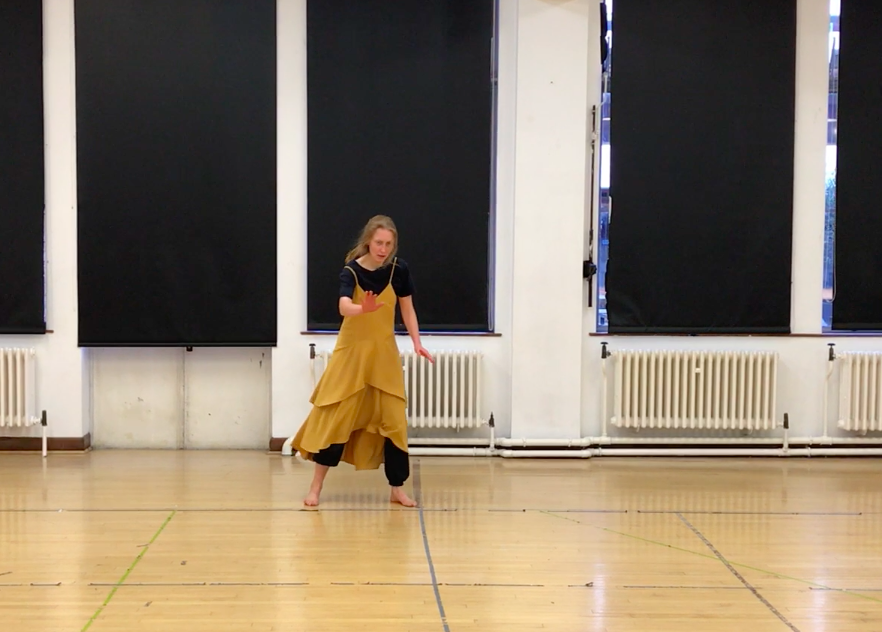
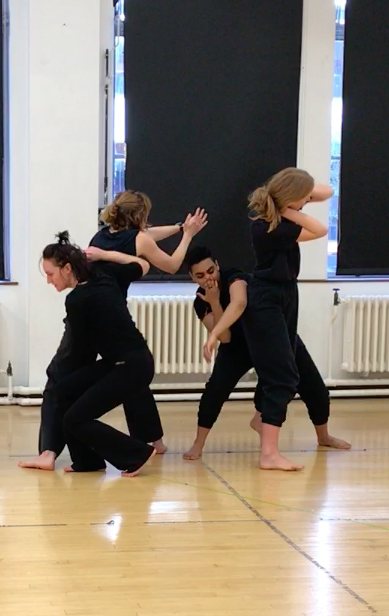
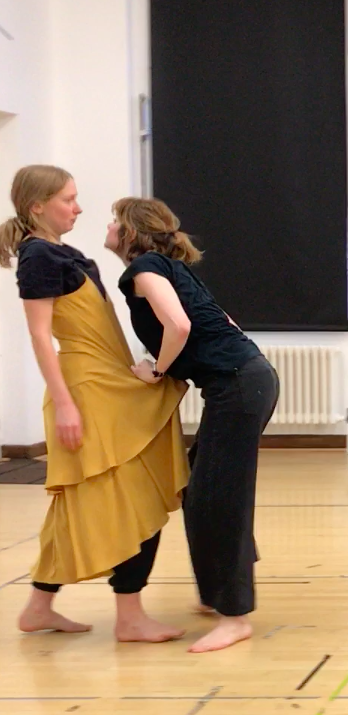
In January 2019 we spend a week exploring in the studio with four performers and musician/composer Laura Snowden.
As always I am looking for a key — the simple driving metaphor and physical principles that will unlock the piece and make it’s pieces hang together in a coherent — though probably not linear — Whole.
Improvising live with Laura is a revelation. We explore the story of Medusa, an escapologist personality who forces a woman to choose between hanging herself and setting fire to herself. Laura’s guitar helps us find the central gestures of the scene; the rhythm between the performers and Laura’s guitar and voice becomes a third protagonist.
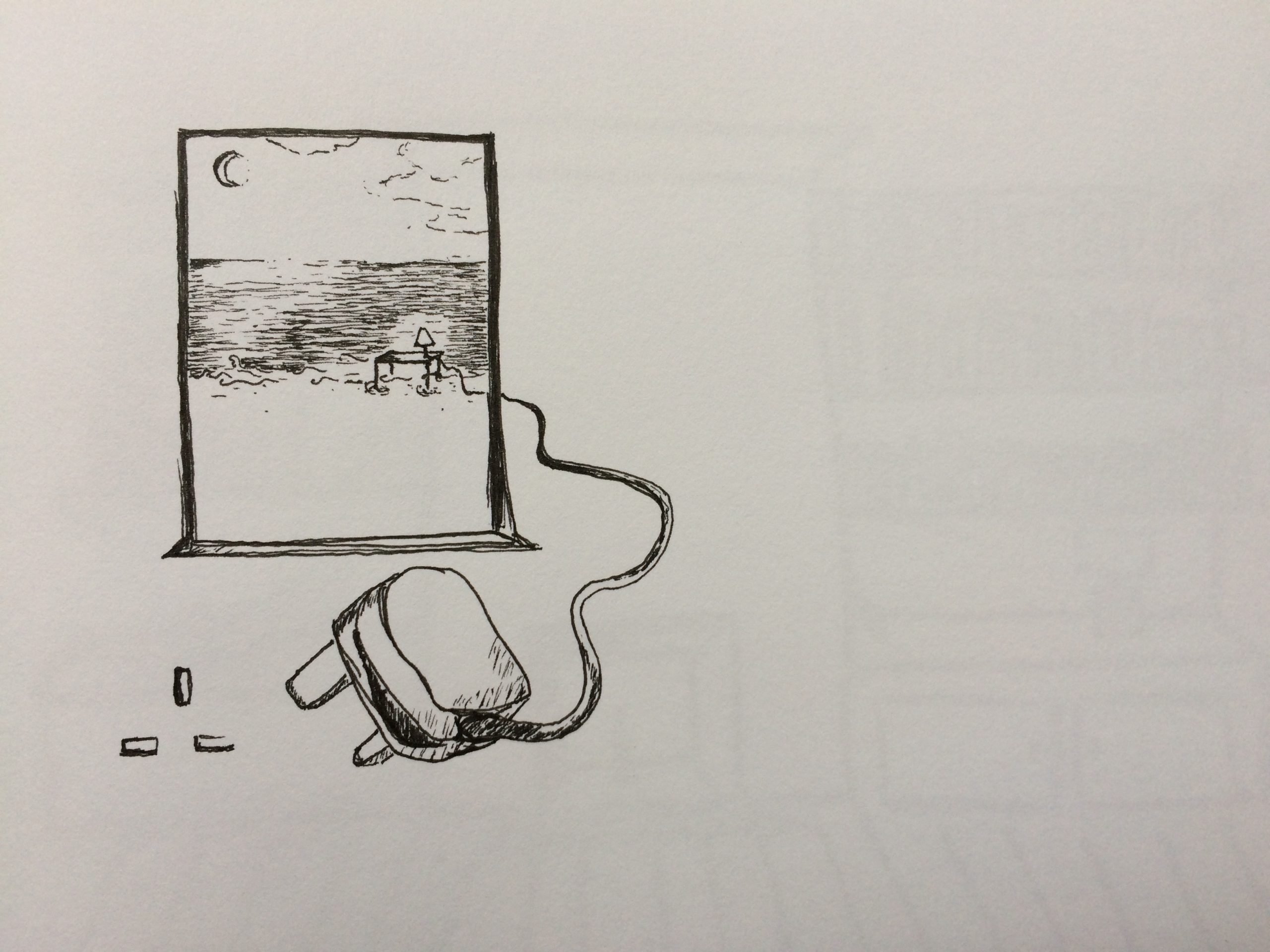
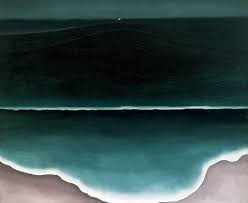
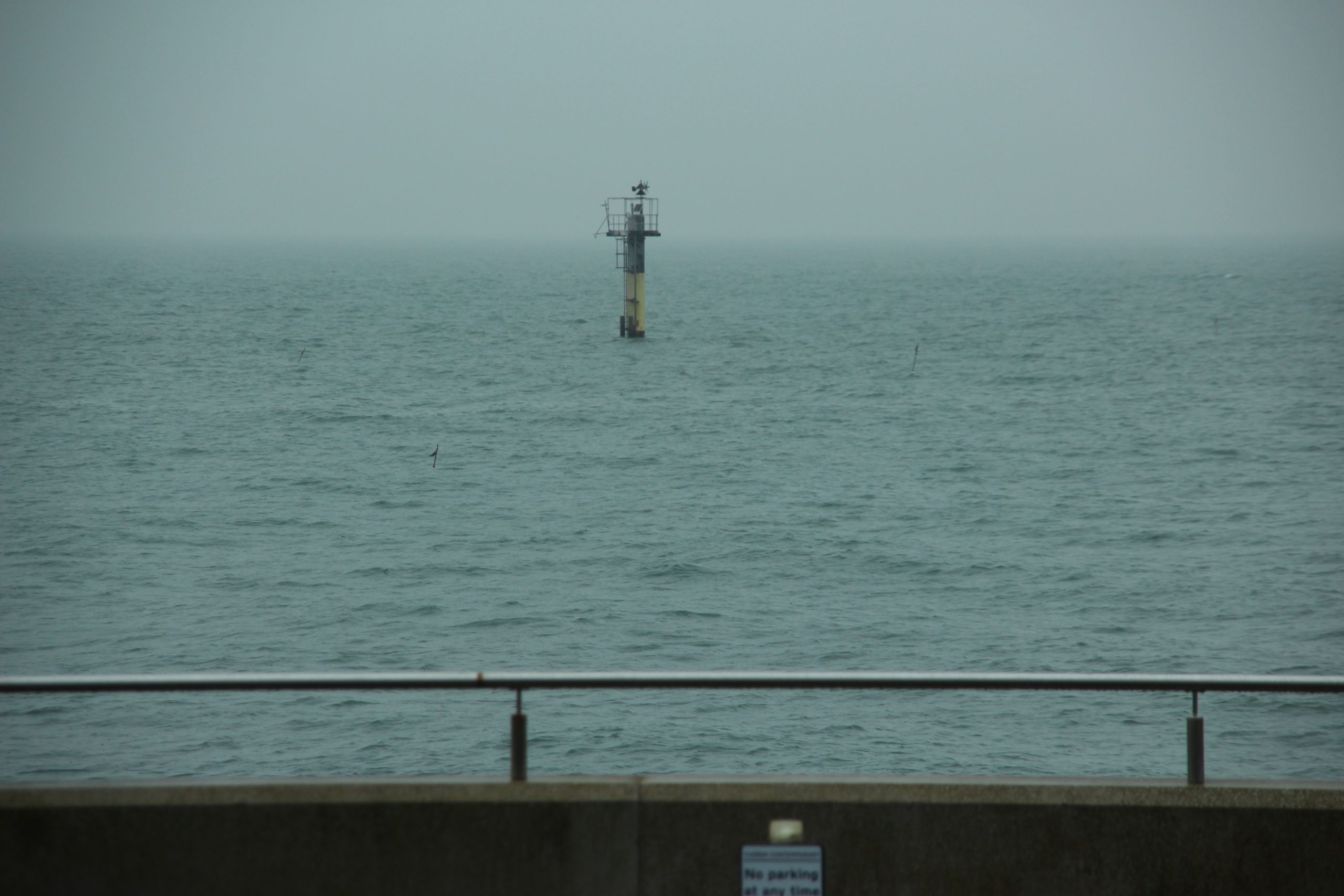
The central location for the piece is something that appears to be a coastguard hut, located on what seems to be the seashore.
The piece refuses to be logical, which ironically ‘makes sense’.
How the piece starts
How the piece ends.
What we don’t know:
How many of our collected stories will we use?
How do we avoid the episodic?
What could the function of an episodic structure be?
Why should the audience care?
How to avoid that movement makes words redundant, and vice versa?
March 2019: Creativity for survival: why human beings are incredible
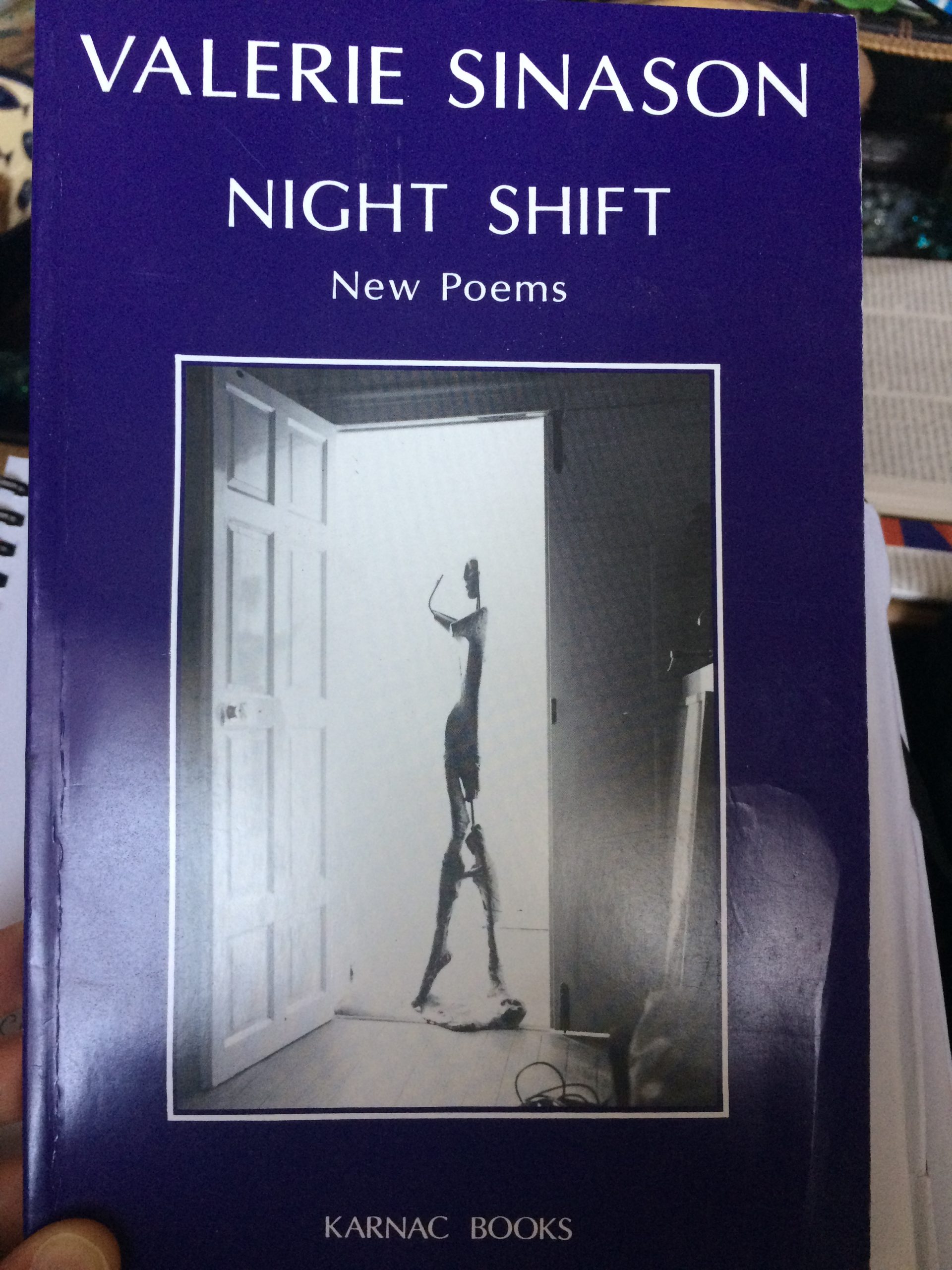
Notes from interview with Dr Valerie Sinason
We meet Dr Valerie Sinason in her home for a long conversation about poetry and madness, talking in her living room, surrounded by artwork.
Valerie is a poet, writer, child psychotherapist and adult psychoanalyst. She is Director of the Clinic for Dissociative Studies, and consultant research psychotherapist at St George’s hospital. She specialises in work with abused/abusing and dissociative patients including those with a learning disability She has written over 10 books and 60 papers and lectures nationally and internationally.
Among other things, Valerie specialises in dissociative identity disorder, when multiple personalities exist within one person, sometimes without knowledge of each other. It is this notion of fragmentation that we focus on in our conversation, both in its most extreme form and in everyday contexts that we all experience day to day.
Some nuggets from this conversation:
Trauma is movement that has been stopped. As a result you will use everything available to you to move away from the thing that is causing the trauma. Fragmentation happens when you find that you can’t get away by any other means. Dissociation becomes an unconscious act of defence, requiring great creativity. And what a clever defence it is.
In Dissociative Identity Disorder, another personality takes over because you mustn’t know who is hurting you / who has hurt you, because you wouldn’t survive it.
In fragmentation, you stretch out your mind, run into another part of your brain.
We are all fragmenting, are all multiple to degrees. There is a terror in realising we are all multiple.
Sanity is managing your madness for over half the day. Every toddler is mad, managing their thwarted power.
Madness doesn’t make you creative, but if you are, while suffering, you open a window to something at the deepest level.
Poetry is a postcard from the edge, telling us where things are.
Art awakens a part of us that is not normally allowed out
If we had a trauma informed model of treatment we would see the creativity at work in coping with all types of madness.
Reading:
Valerie Sinason: Attachment, Trauma and Multiplicity, and Trauma and Dissociation
John Bowlby: On knowing what you’re not supposed to know
April 2019: Suspending our disbelief: On psychosis and entering each others’ worlds
Notes from interview with Dr Dorothee Bonnigal-Katz
Dr Bonnigal-Katz is founder and clinical lead of the Psychosis Therapy Project (PTP), a specialist therapy service for people experiencing psychosis. The PTP has been operating at Islington Mind since 2013. Since February 2017, it has expanded to South London under the auspices of Lambeth and Southwark Mind.
Dr Bonnigal-Katz also runs a private practice, and has extensive experience working with clients from more marginalised backgrounds (whether in terms of nationality, sexual orientation, ethnicity, religion, or socio-economic status). She is one of the editors of the journal Sitegeist, a journal of psychoanalysis and philosophy, as well as a leading translator in the field of psychoanalysis.
We meet Dorothee at the homestead of the Psychosis Therapy project in London. Dorothee specialises in psychosis therapy, and this is what our conversation centres around. We are especially interested in metaphor: how it functions in poetry, how it functions in different types of madness, and the role of metaphor in psychosis.
Some nuggets from this conversation:
Repression is this thing that keeps things below the bar and allows us to operate the ‘as if’ in our thinking. Because we can say ‘these things are there, but we’re going to operate ‘as if’ they weren’t. That’s the function of repression, to kind of keep them in that faraway, ‘as if’, no-presence, which, in reality those things arethere, but we suspend our knowledge that they are there.
In psychosis you can’t do that anymore, the mechanisms of repression break down.
So everything is there, and everything is kind of flooding the psyche, there’s no more separation between, say, unconscious and conscious. Dreams, realities, fantasies, all these differentiations break down. With degrees — sometimes it’s intermittent, for some people, sometimes, it’s permanent.
But what happens however is that the individual creates another metaphoric system — a delusional system, as we call it, which has the function of repairing this ‘as if’, this universal ‘as if’ if you want, that’s broken down. In this delusional system there is, in fact, meaning to be found, but the reference point is not the same as the mainstream reference points.
So the individual is using a metaphoric system that is completely idiosyncratic to them, so there’s something non-communicable about their experience.
The kind of work that we do here is actually to create bridges with these experiences, so that people who might be stuck in this incommunicable delusional system — which actually protects them, and does the job of keeping them safe from something much more threatening — we kind of find a way to get in the system.
So through an alliance with them we try to help… not so much find meaning, because the meaning’s always there, but help find common ground where we can speak the same language, in a way.
And then we can start repairing things a little bit, in terms of fragmentation, in terms of people who are really not able to be delineated as a subject in relation to others, who are very vulnerable in time and space and just don’t really know where they are anymore.
in psychosis temporality and causality are tricky concepts
psychosis is not non-sense. Madness makes sense.
Reading: Essay by Francois Roustang: ‘Towards a Theory of Psychosis’ in Dire Mastery
May – June 2019: Margate Recovery College: Writing and Performance workshops
In the early summer of 2019, we run a series of creative workshops partnering with Margate Recovery College and the Turner Contemporary, who host us in one of their beautiful rooms overlooking the sea. It is an apt setting, given what we have found so far.
The theme for the workshops is “The Escapologist’s return: What does it feel like to embark on a journey of recovery”?
Our handout stated:
These workshops will be free of pressure, and meet you wherever you are on your journey. We will take you through creative writing tasks, the outcomes of which are then further explored through performance. We will look at what words can do to communicate, and how performance can help when words alone are not enough.
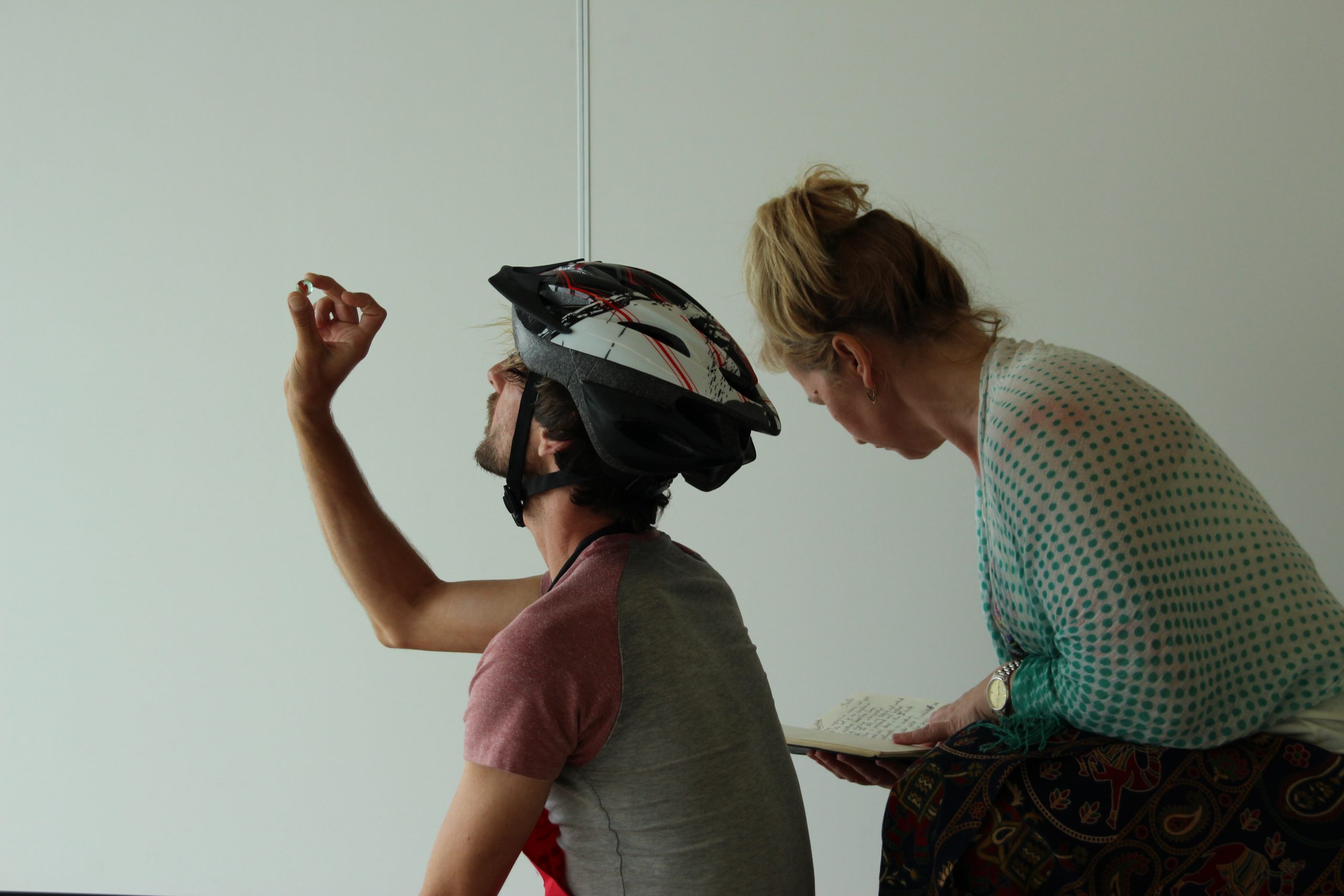
Over four sessions, we work with writing, speaking, movement, objects, music. We discuss and we laugh a lot. Connection with the imagination — so very different for each individual, offering a beautiful palate of styles — is at the heart of the work.
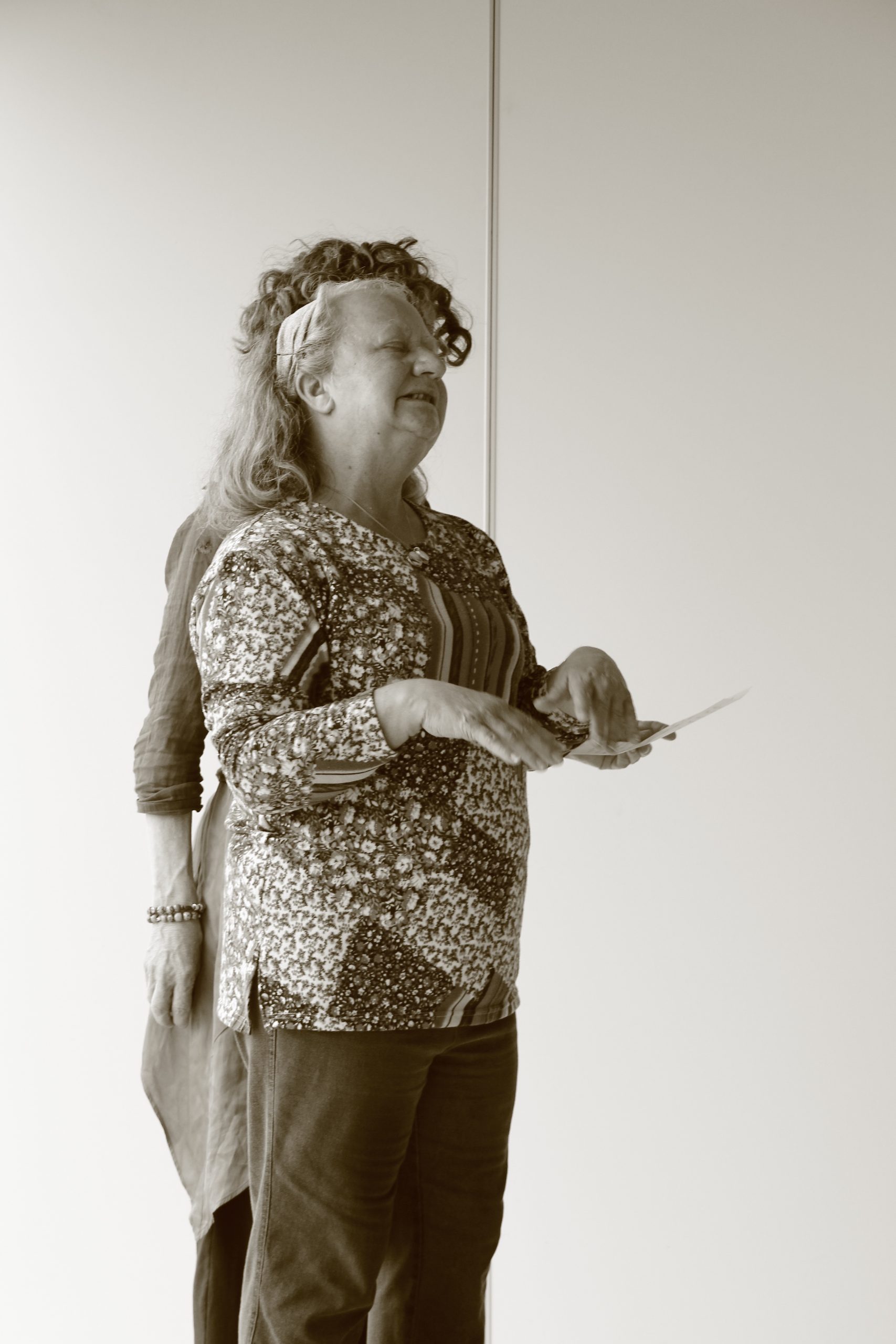
We work with each other and with the presence of the sea, sky and horizon. By the final week, the group has produced deeply moving performances, each person giving a little treasure from their process. The growth in confidence and the warmth of the group are a joy to be part of.
At the end of the process, the group requests help with a meeting space from the Recovery College, to continue to meet without us.
Participant feedback:
Thank you, Roanna and Louisa, for providing a fantastic workshop. Your professional approach, competency, patience and openness gave me the self-confidence to create something new. The workshop encouraged me to be more open to work with my body and finally create my piece of poetry. It was an amazing experience. I have never created poetry, but step by step, I was able to write something new. It allows me to express my feelings, and I am really happy about that. Thank you very much.
The course was challenging for me personally as I have never taken part in creative writing / movement course. But I really enjoyed the course and felt the workshops gave me the opportunity to explore my creativity from a different perspective. I just didn’t want it to end. Fantastic ! !
The performance was blast in the making and fun to perform and the location made it so much more exciting and easier to perform at. Creativity in all of us comes with the help of being allowed to connect in so many different ways.
The Escapologist continues to evolve. In the meantime, it has given birth to another project, Inappropriate Anger, on lived experience of the BPD label, which pressed itself into the foreground due to the number of loved ones dying and suffering and failing to be helped.